

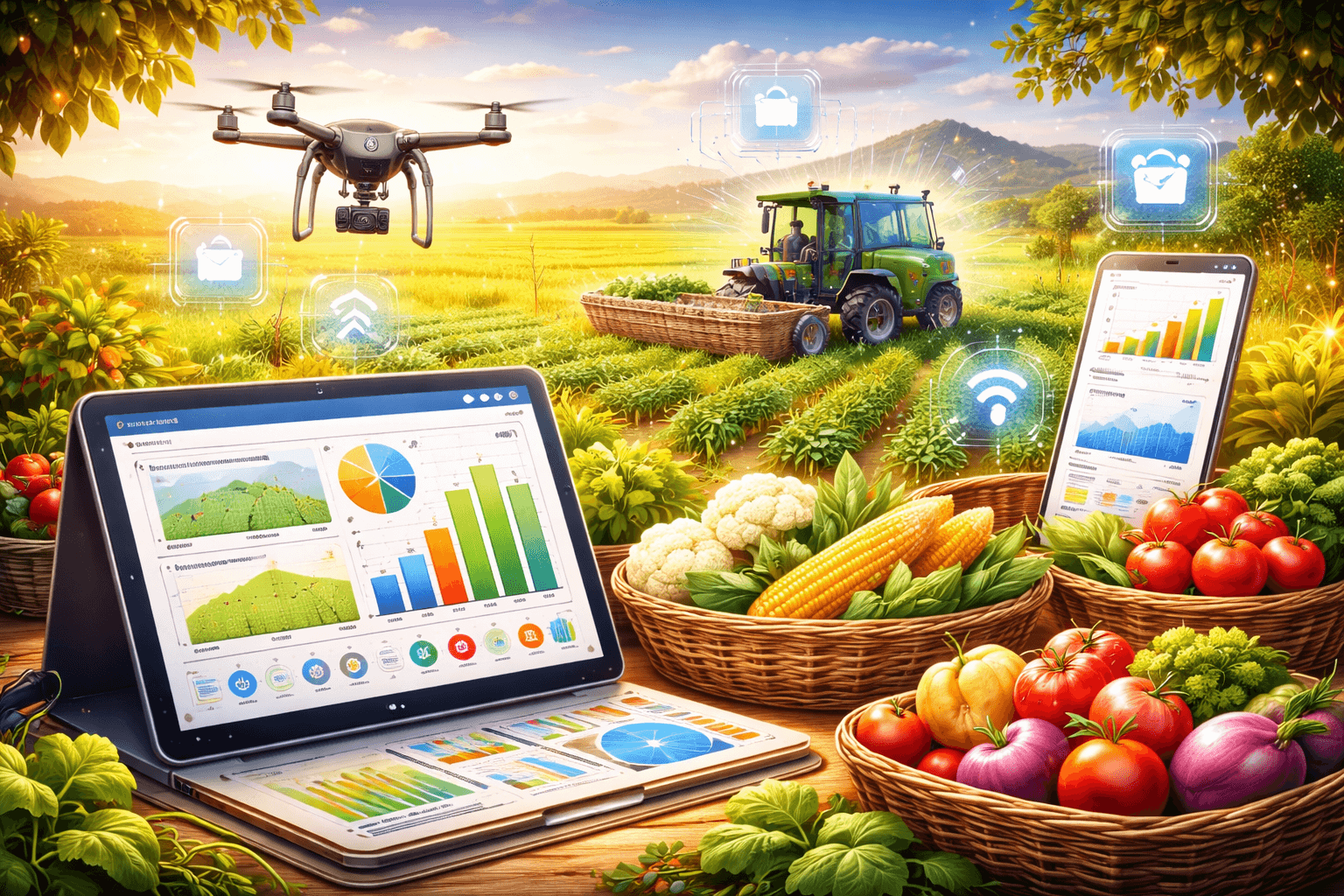
India’s farm economy is undergoing a quiet transformation.
Beyond traditional farming, a new wave of agritech startups is building solutions that improve productivity, reduce waste, strengthen supply chains, and increase farmer incomes.
From AI-powered crop analytics to farm-to-market platforms, these startups are reshaping how agriculture works in India.
Here’s a closer look at the growing ecosystem — and why it matters.
Why India’s Farm Economy Is Ripe for Innovation
Agriculture contributes significantly to India’s GDP and supports millions of livelihoods. Yet the sector faces persistent challenges:
-
Fragmented land holdings
-
Limited access to credit
-
Supply chain inefficiencies
-
Climate risks
-
Price volatility
This gap has created space for technology-driven agricultural solutions.
AgriTech startups are stepping in with data, automation, and digital platforms to solve these issues.
The Rise of Agritech Startups in India
Over the past few years, India has seen rapid growth in:
-
Precision farming tools
-
Digital marketplaces for farmers
-
Farm input supply platforms
-
Post-harvest logistics tech
-
Agri-fintech solutions
These startups operate across the value chain — from seed to sale.
Many focus on increasing farmer income through:
-
Direct market access
-
Transparent pricing
-
Reduced middlemen
-
Data-driven crop planning
How These Startups Are Changing the Game
1. Precision Farming and AI
Some startups use:
-
Satellite imaging
-
AI-based crop monitoring
-
Weather prediction models
This helps farmers:
-
Improve yield
-
Reduce input costs
-
Make better planting decisions
2. Digital Marketplaces
Platforms connecting farmers directly to buyers help:
-
Eliminate unnecessary intermediaries
-
Improve price realization
-
Increase transparency
This strengthens India’s agricultural supply chain.
3. Agri-Fintech and Credit Access
Access to credit remains a challenge in rural India.
Agri-focused fintech startups are providing:
-
Digital loan processing
-
Alternative credit scoring
-
Input financing
This enables farmers to invest in better seeds, equipment, and irrigation systems.
4. Supply Chain and Logistics Innovation
Post-harvest losses remain high in India.
Startups are improving:
-
Cold storage management
-
Farm-to-retail logistics
-
Inventory tracking systems
Better infrastructure reduces waste and improves profitability.
Why Investors Are Watching Closely
Agritech is no longer a niche sector.
Investors see strong potential due to:
-
Rising food demand
-
Government support for digital agriculture
-
Growing smartphone penetration in rural areas
-
Increasing climate-driven urgency
India’s farm economy represents one of the largest untapped digital transformation opportunities globally.
The Bigger Trend: Farming Meets Technology
India’s farm economy is evolving from labor-intensive operations to data-informed agriculture.
Technology is enabling:
-
Predictive farming
-
Better price discovery
-
Smarter resource use
-
Climate resilience
This transformation is not just about startups. It’s about improving livelihoods at scale.
What This Means for the Future
If these startups continue scaling effectively, we may see:
-
Higher farm productivity
-
Stronger rural incomes
-
Reduced food wastage
-
More efficient agricultural exports
Agriculture may be one of India’s oldest sectors. But it’s quickly becoming one of its most innovative.
At Wasupp.info, we see this as more than startup news. It’s a signal that India’s economic backbone is evolving through technology.
Suggested Articles
 General
China's BCI Horizon: Widespread Use Expected in 3-5 Years
An expert predicts China will see widespread adoption of Brain-Computer Interface (BCI) technology within 3-5 years, ...
Read Article arrow_forward General
YC Startup School: AI Seed Funding Dries Up, Giants Feast
YC Startup School highlights a critical trend: seed-stage AI startups struggle for capital as tech giants amass dispr...
Read Article arrow_forward General
Q1 2026: AI Fuels $300B Startup Investment, Shattering Records
Q1 2026 saw venture funding explode to nearly USD 300 billion, driven primarily by the relentless AI boom. Learn how ...
Read Article arrow_forward General
When Flock Comes to Town: Cities Axing Surveillance Tech
Explore why cities are increasingly opting out of controversial Flock Safety license plate readers due to privacy con...
Read Article arrow_forward