

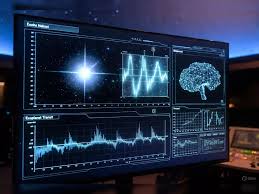
Introduction: The Cosmic Needle in a Haystack
For millennia, humanity gazed at the stars, wondering if other worlds existed beyond our solar system. The sheer vastness of space and the faintness of distant planets made this quest seem insurmountable. Until recently, finding exoplanets – planets orbiting stars other than our Sun – was akin to searching for a needle in an astronomical haystack, a task requiring immense patience, advanced instrumentation, and a stroke of luck. However, the advent of Artificial Intelligence (AI) is fundamentally rewriting the rules of planet hunting, transforming it from a laborious manual process into an era of automated, efficient, and increasingly prolific discovery.
The challenge has always been multifaceted: billions of stars, each a potential host to multiple planets, generating unfathomable amounts of data from ground-based and space telescopes. Traditional methods, while groundbreaking, struggled to keep pace with the data deluge. Enter Artificial Intelligence. With its unparalleled ability to process, analyze, and find patterns in colossal datasets, AI is not just assisting astronomers; it's becoming an indispensable partner, pushing the boundaries of what's possible in our quest to find other Earths and, perhaps, other life.
The Dawn of AI in Astronomy: From Manual Scrutiny to Automated Discovery
Traditional Planet Hunting Methods and Their Limits
Before AI took center stage, planet hunting relied on several ingenious but often labor-intensive techniques. The most successful has been the transit method, where astronomers look for tiny, periodic dips in a star's brightness as a planet passes in front of it. Another key method is radial velocity, which detects the subtle wobble in a star caused by the gravitational tug of an orbiting planet. Direct imaging, while visually compelling, is incredibly challenging because exoplanets are extremely faint compared to their host stars and are often lost in stellar glare.
These methods generate massive time-series datasets of stellar light curves and spectroscopic measurements. For missions like NASA's Kepler and TESS (Transiting Exoplanet Survey Satellite), terabytes of data stream back to Earth, containing millions of potential signals. Manually sifting through these signals for genuine planetary transits or radial velocity shifts is incredibly time-consuming, prone to human error, and often overwhelmed by false positives caused by stellar activity, instrumental noise, or background eclipsing binaries. The sheer scale of the universe demanded a more scalable solution.
How AI Steps In: Beyond Human Capacity
Artificial Intelligence, particularly machine learning, offers precisely that scalable solution. AI algorithms excel at pattern recognition, anomaly detection, and classification – skills perfectly suited for identifying the subtle signatures of exoplanets hidden within noisy astronomical data. Instead of astronomers painstakingly examining every light curve, AI models can be trained on known exoplanet transits and false positives, learning to distinguish true planets with remarkable accuracy and speed. This capability allows researchers to tackle data volumes that would be impossible for human teams alone.
The shift to AI-driven analysis means that telescopes can gather more data than ever, confident that powerful algorithms will process it efficiently. This not only accelerates discovery but also enables the identification of fainter, smaller planets that might have been missed by human eyes or simpler automated scripts. The integration of AI into astronomical workflows represents a paradigm shift, moving from brute-force data collection and manual verification to intelligent, automated analysis that maximizes discovery potential. Understanding how these intelligent systems operate and the underlying principles that make them scalable is crucial for their effective application in complex scientific fields, much like the discussion on why separating logic and search is key to scalable AI agents.
AI's Core Contributions to Exoplanet Detection
Enhancing the Transit Method
The transit method has been the most prolific exoplanet detection technique, but it's also susceptible to myriad false positives. AI algorithms, particularly deep learning models like Convolutional Neural Networks (CNNs), have revolutionized this process. Trained on vast datasets of both real exoplanet transits and astrophysical imposters, these neural networks learn to identify the subtle, characteristic 'U' shape of a transit light curve, even when it's buried in stellar noise or corrupted by instrument artifacts.
AI can:
- **Rapidly Scan Millions of Light Curves:** Automating the initial sift through terabytes of data from missions like TESS.
- **Filter Out False Positives:** Distinguish between actual planetary transits and phenomena like stellar flares, binary stars eclipsing each other, or instrumental glitches, significantly reducing the verification workload for astronomers.
- **Detect Weaker Signals:** Identify smaller planets or planets orbiting fainter stars, whose transits are often too subtle for traditional detection algorithms or human inspection.
- **Characterize Transit Parameters:** Quickly estimate a planet's radius and orbital period, providing crucial initial data for follow-up observations.
One notable example is the use of neural networks to re-analyze archived Kepler data, leading to the discovery of previously missed exoplanets, including a potentially habitable-zone planet. This demonstrates AI's power not just for new data, but for extracting more value from existing datasets.
Revolutionizing Radial Velocity Analysis
The radial velocity method relies on detecting minute Doppler shifts in a star's spectrum, indicating a stellar wobble caused by an orbiting planet. The challenge here is distinguishing these tiny, periodic shifts from intrinsic stellar activity (like star spots or convection), which can mimic planetary signals. This 'stellar noise' has long been a major hurdle, especially for detecting small, Earth-sized planets.
AI-driven techniques are making significant strides in overcoming this:
- **Denoising Spectral Data:** Machine learning algorithms can learn to identify and subtract the complex signatures of stellar activity from radial velocity measurements, isolating the true planetary signals.
- **Untangling Multi-Planet Systems:** When a star hosts multiple planets, their gravitational tugs combine into a complex signal. AI can decompose these intricate patterns, identifying individual planets and their orbital characteristics more accurately than traditional periodogram analysis.
- **Improving Measurement Precision:** By learning the systematic errors and biases in spectrograph data, AI can help refine radial velocity measurements, pushing the detection limits towards smaller, less massive planets.
The ability of AI to parse through this spectral 'babble' is opening up new avenues for detecting planets around active stars and in crowded multi-planet systems, providing a clearer picture of their dynamics.
Decoding Direct Imaging Data
Directly imaging an exoplanet is like trying to photograph a firefly next to a lighthouse from miles away. The star's glare overwhelms any light from its orbiting planets. Sophisticated techniques using coronagraphs and adaptive optics are employed, but even then, processing the resulting images to reveal a faint planet requires advanced computational methods. AI is proving invaluable in this domain:
- **Image Denoising and Artifact Removal:** AI algorithms can distinguish between genuine planetary signals and optical artifacts caused by the telescope or atmospheric turbulence, cleaning up raw images.
- **Contrast Enhancement:** Machine learning can enhance the contrast between the star and the much fainter planet, making previously undetectable worlds visible.
- **Predictive Imaging:** By understanding the characteristics of known exoplanets and stellar systems, AI can guide imaging campaigns, suggesting optimal observation parameters or even predicting where a faint planet might appear in a processed image.
While still in its early stages, AI promises to significantly improve the yield and quality of direct imaging campaigns, especially with upcoming powerful telescopes like the James Webb Space Telescope (JWST) and future Extremely Large Telescopes (ELTs).
Beyond Detection: Characterizing Exoplanets with AI
Unveiling Planetary Properties
Finding an exoplanet is just the first step; understanding what kind of world it is requires sophisticated characterization. AI is becoming crucial for inferring a planet's fundamental properties:
- **Size, Mass, and Density:** By combining data from transit depths, radial velocity amplitudes, and stellar models, AI algorithms can more accurately estimate a planet's radius, mass, and thus its density, offering clues about its composition (rocky, gaseous, icy).
- **Atmospheric Composition:** When an exoplanet transits its star, a tiny fraction of the starlight passes through its atmosphere, leaving tell-tale spectral 'fingerprints' of various molecules. Interpreting these complex spectra to identify gases like water vapor, methane, or carbon dioxide is incredibly challenging. AI, particularly deep learning, can analyze these high-resolution spectra to pinpoint atmospheric constituents and their abundances, even with noisy or incomplete data. This involves incredibly complex analytical tasks that highlight the need for robust and scalable AI agents, as discussed in the context of advanced AI systems.
- **Orbital Parameters:** AI helps refine orbital periods, inclinations, and eccentricities, leading to a more precise understanding of the planet's architecture within its stellar system.
These characterizations are vital for determining whether a planet could host life, providing the necessary context for subsequent, more targeted observations.
The Search for Habitable Worlds
The ultimate goal of planet hunting for many is to find worlds that could support life. This involves identifying planets within the 'habitable zone' – the region around a star where temperatures allow for liquid water to exist on a planet's surface. AI plays a critical role in:
- **Assessing Habitability Potential:** AI models can integrate various parameters – stellar type, planetary distance, estimated atmospheric composition, and inferred geology – to generate probabilities of habitability, guiding astrobiologists towards the most promising targets.
- **Identifying Biosignatures:** The 'holy grail' is the detection of biosignatures – molecules in an exoplanet's atmosphere that strongly suggest the presence of life (e.g., oxygen, methane in specific abundances). AI is being developed to detect these subtle chemical imbalances in atmospheric spectra, distinguishing them from abiotic geological or atmospheric processes.
This systematic approach, powered by AI, transforms the search for life from speculative wonder into a data-driven scientific endeavor.
Predictive Power and New Frontiers
Forecasting the Unseen
Perhaps one of AI's most exciting contributions is its predictive capability. By learning the underlying demographics of exoplanet populations and stellar system architectures, AI models can:
- **Predict Undiscovered Planets:** Identify statistical patterns that suggest the presence of additional, currently undetected planets in known systems, or predict which types of stars are most likely to host planets of certain characteristics.
- **Guide Future Observations:** Prioritize targets for follow-up observations by next-generation telescopes, ensuring that precious observing time is allocated to the most promising candidates. This optimizes resource allocation in a field where observational time is incredibly expensive.
This predictive power means astronomers are no longer just reacting to data; they are proactively using AI to inform their search strategies, making the quest for new worlds more efficient and targeted than ever before.
The Future of Exoplanet Research
As new, more powerful telescopes come online – such as the European Space Agency's PLATO mission, the Nancy Grace Roman Space Telescope, and ground-based giants like the Extremely Large Telescope – the data volume will only continue to explode. The necessity of AI in processing this deluge will become even more pronounced. Future applications of AI in exoplanetology are likely to include:
- **Autonomous Observatories:** AI controlling telescopes to optimize observations in real-time, reacting to new discoveries or changing conditions.
- **Multi-Messenger Astronomy:** Integrating exoplanet data with observations from gravitational wave detectors or other sources to provide a holistic view of planetary formation and evolution.
- **Complex System Modeling:** AI simulating entire stellar systems to understand their stability, long-term evolution, and potential for sustaining life over billions of years.
The global scientific community is increasingly recognizing the transformative potential of AI across various domains, including space exploration. Discussions at major forums like the India AI Impact Summit 2026 highlight the converging efforts of world leaders to shape the future of AI and its application in grand challenges, making it clear that international collaboration will be key to harnessing this technology for cosmic discovery.
Challenges and Ethical Considerations
While AI offers immense advantages, its integration into planet hunting is not without challenges. One concern is the 'black box' problem, where complex deep learning models can produce results without clear, human-understandable explanations for their decisions. This lack of interpretability can make it difficult for astronomers to fully trust or verify AI's findings without extensive cross-validation.
Other challenges include:
- **Data Bias:** If AI models are trained on biased or incomplete datasets, they may perpetuate those biases in their predictions, potentially overlooking entire classes of exoplanets.
- **Computational Resources:** Training and running advanced AI models on massive astronomical datasets require significant computational power and energy, posing resource challenges.
- **Human Oversight:** While AI automates much of the process, human astronomers remain essential for critical thinking, validating AI findings, and driving new hypotheses. Ensuring the right balance between automation and human expertise is crucial.
Conclusion: A New Era of Cosmic Discovery
Artificial Intelligence is not just a tool; it's a fundamental shift in how we approach the discovery and characterization of exoplanets. From sifting through mountains of telescope data to unveiling the faint atmospheric fingerprints of distant worlds, AI is enabling astronomers to see further, detect more subtly, and understand more deeply than ever before. It has transformed the cosmic needle-in-a-haystack problem into a systematic, data-driven quest.
As AI continues to evolve, its synergy with advanced telescopes will undoubtedly lead to an acceleration of discoveries, bringing us closer to answering humanity's oldest questions: Are we alone? What other worlds exist? By pushing the boundaries of what's possible, AI is truly rewriting the narrative of planet hunting, opening up a new era of cosmic exploration and bringing us ever closer to understanding our place in the universe. For more insights into how technology is transforming our world, explore the vast resources available on our platform.
Suggested Articles
 General
Sam Altman's Diverse Investment Portfolio Beyond OpenAI
Explore Sam Altman's personal investments across AI, nuclear fusion, biotech, and cryptocurrency, revealing his visio...
Read Article arrow_forward General
Women Entrepreneurs: Harnessing Technology for Growth
Discover how technology empowers women entrepreneurs to overcome barriers, expand markets, optimize operations, and a...
Read Article arrow_forward General
Meta Unveils New AI Model, Intensifying Race with Google & OpenAI
Meta has debuted its latest Artificial Intelligence model, aiming to close the gap with industry leaders Google and O...
Read Article arrow_forward General
IVRI's Breakthrough: Sahiwal Calves Born Via Advanced Tech
India's IVRI has successfully produced Sahiwal calves using advanced reproductive technologies, marking a significant...
Read Article arrow_forward