

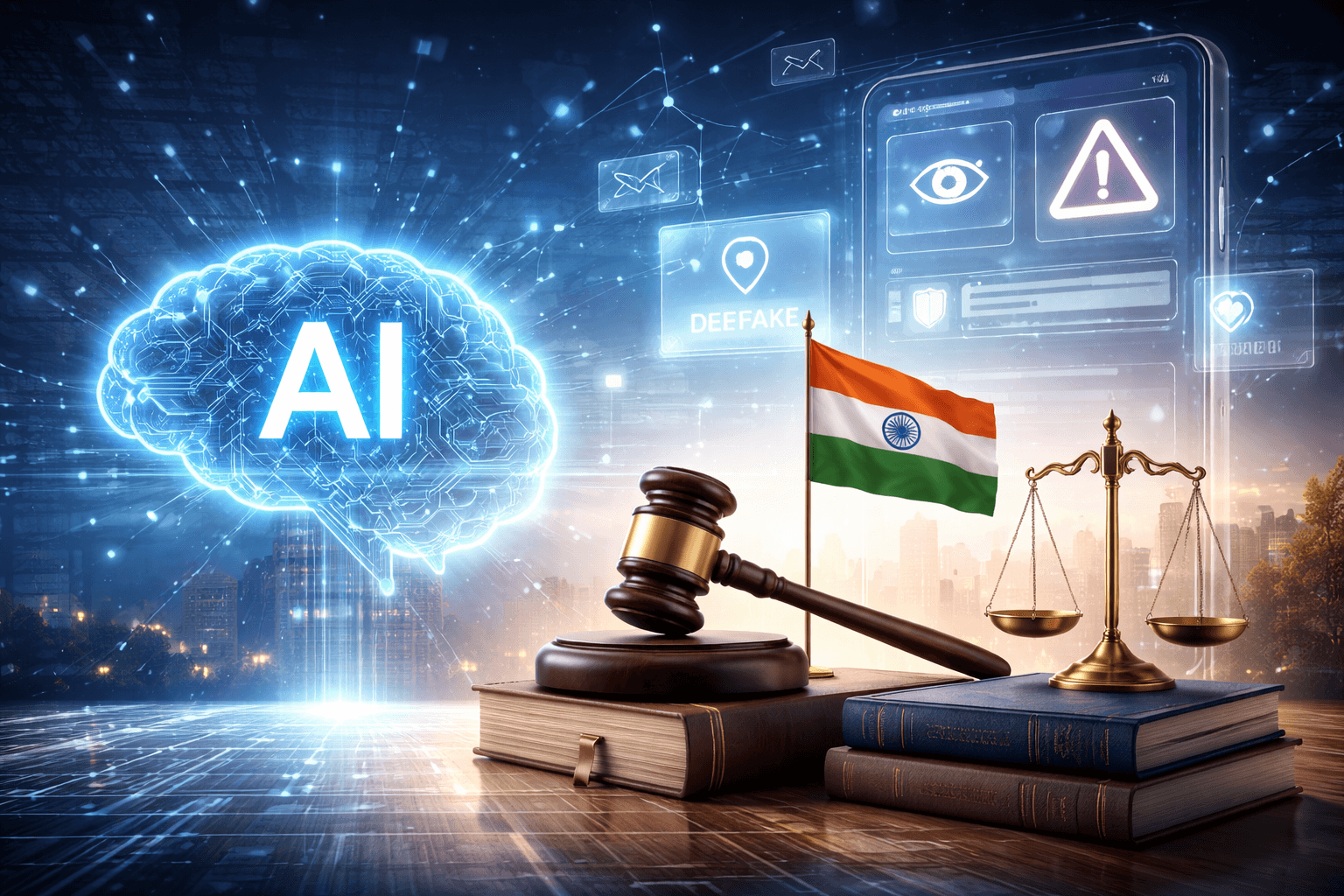
AI can now write posts, generate images, clone voices, and even create videos that look real. And that’s exactly why governments are stepping in.
India has officially notified amendments to its IT Rules to regulate AI-generated content, signalling a major shift in how digital platforms, intermediaries, and AI tools will be governed going forward. The move is aimed at tackling misinformation, deepfakes, and harmful synthetic media without slowing innovation.
This update places India among a growing list of countries tightening oversight on generative AI.
What Has the Government Changed?
Under the amended Information Technology Rules, digital platforms and intermediaries now have clear responsibilities when it comes to AI-generated content.
The updated framework focuses on:
-
Transparency around synthetic and AI-generated media
-
Faster action on misleading or harmful content
-
Stronger accountability for platforms hosting such content
While the rules do not ban AI tools, they push platforms to identify, label, and act when AI-generated content poses risks to users or public order.
Why India Felt the Need to Act Now
The timing is not accidental.
Over the past year, India has seen a sharp rise in:
-
Deepfake videos of public figures
-
AI-generated misinformation during elections
-
Voice cloning scams and financial fraud
-
Synthetic images used for harassment
With AI tools becoming cheaper and easier to use, regulators saw a clear gap in existing laws. The IT Rules amendment aims to close that gap before misuse scales further.
What Platforms and AI Companies Must Do
The amended rules place additional obligations on:
-
Social media platforms
-
Messaging services
-
AI content generation tools
-
Digital intermediaries
Key expectations include:
-
Taking down unlawful AI-generated content quickly
-
Preventing the spread of misleading synthetic media
-
Cooperating with government authorities when required
-
Strengthening content moderation systems
This means AI platforms can no longer claim neutrality when harmful content is generated or amplified through their systems.
Does This Mean AI Content Will Be Banned?
No. And that’s an important distinction.
India’s approach is regulatory, not restrictive.
The rules do not stop:
-
AI writing tools
-
Image generation platforms
-
Video and voice synthesis
Instead, they focus on responsible deployment. The intent is to ensure AI is used creatively and productively, without harming individuals, society, or democratic processes.
How This Impacts Creators and Users
For everyday users and creators, the impact will be subtle but important.
You may start seeing:
-
Clearer labels on AI-generated content
-
Faster takedowns of fake or harmful media
-
More platform warnings around manipulated content
For creators using AI ethically, nothing changes. For those misusing it, accountability increases.
India’s AI Regulation vs Global Trends
India’s move mirrors global regulatory momentum.
-
The EU is advancing its AI Act
-
The US is issuing executive guidance on AI safety
-
China already mandates watermarking of AI content
India’s IT Rules amendment shows a preference for platform responsibility over heavy licensing, a model that tries to balance innovation with public trust.
Why This Matters for the Future of AI in India
India is one of the fastest-growing AI markets. Regulation was inevitable.
These amendments:
-
Reduce uncertainty for businesses
-
Protect users from synthetic media abuse
-
Signal policy readiness for AI at scale
More importantly, they establish a foundation for future AI-specific laws without rushing into over-regulation.
At Wasupp.info, this is the kind of signal that matters, measured governance, not panic-driven policy.
The Bigger Picture
AI is moving faster than laws ever have. India’s IT Rules amendment is an attempt to catch up without breaking what works.
The message is clear:
Use AI. Build with AI. Innovate with AI.
But don’t misuse it, and don’t ignore responsibility.
Suggested Articles
 Jobs
Jobs
Jack Dorsey: AI Can Do 40% of Your Job. Are You Ready?
Block CEO Jack Dorsey believes AI could automate 40% of jobs. Explore the implications, opportunities, and challenges...
Read Article arrow_forward
General
Publishers' AI Struggle: Detecting Machine-Written Books
The literary world faces an uphill battle detecting AI-generated books. Publishers and authors grapple with new chall...
Read Article arrow_forward General
Meta Smartglasses: A Month of Innovation & Discomfort
A deep dive into a month-long experience with Meta's smartglasses, exploring their utility, the "creep factor," and t...
Read Article arrow_forward General
AI-Powered Cyber Heist: Mexico Suffers Massive Data Breach
Hackers leveraging artificial intelligence have reportedly stolen hundreds of millions of Mexican government and priv...
Read Article arrow_forward