

India's Technological Leap: Odisha Becomes Home to First Advanced 3D Semiconductor Packaging Unit
In a landmark development set to redefine India's position on the global technology map, the groundbreaking ceremony for the nation's first advanced 3D semiconductor packaging unit has commenced in Odisha. This ambitious project marks a pivotal moment in India's journey towards self-reliance in high-tech manufacturing, promising a significant boost to critical sectors such as Artificial Intelligence (AI), 5G telecommunications, and defence technology. The establishment of this cutting-edge facility underscores India's strategic intent to move beyond a consumer of technology to a formidable producer, particularly in the highly competitive and capital-intensive semiconductor industry.
The semiconductor industry is the bedrock of the digital age, powering everything from smartphones and supercomputers to advanced military systems. With global supply chain vulnerabilities highlighted in recent years, nations worldwide are prioritizing domestic semiconductor capabilities. India, with its vast talent pool and growing digital economy, has identified this sector as crucial for its economic growth and national security. The Odisha unit is a direct manifestation of this vision, designed to tackle one of the most complex aspects of chip manufacturing: advanced packaging.
Understanding the Significance of 3D Semiconductor Packaging
Traditional semiconductor manufacturing involves fabricating chips on a flat, two-dimensional surface. However, as the demand for more powerful, smaller, and energy-efficient devices grows, 2D scaling is reaching its physical limits. This is where 3D semiconductor packaging comes into play. Instead of arranging components side-by-side, 3D packaging stacks multiple chips vertically, often integrating different types of chips (e.g., processors, memory, sensors) into a single, compact unit.
Key Advantages of 3D Packaging:
- Enhanced Performance: Shorter electrical pathways between stacked chips lead to faster data transfer and improved overall performance.
- Increased Miniaturization: Stacking allows for a significantly smaller footprint, crucial for portable devices and space-constrained applications.
- Improved Power Efficiency: Reduced distances for signals also mean less power consumption.
- Greater Functionality: Different chip types can be integrated more closely, enabling more complex and specialized functionalities in a single package.
- Cost-Effectiveness: While initial investment is high, 3D packaging can sometimes lead to lower overall system costs by improving yield and integrating functionalities.
The Odisha facility will focus on this advanced form of packaging, which is critical for producing the high-performance chips required by next-generation technologies. This isn't just about assembly; it involves intricate processes like wafer thinning, through-silicon vias (TSVs), micro-bumps, and advanced bonding techniques, all of which require state-of-the-art infrastructure and highly skilled personnel.
Fueling the AI Revolution
Artificial Intelligence (AI) is arguably the most transformative technology of our era, and its capabilities are directly tied to the power and efficiency of the underlying hardware. AI workloads, especially those involving deep learning and neural networks, demand immense computational power and memory bandwidth. Traditional processors often struggle to keep up with the data-intensive nature of AI algorithms.
This is where advanced 3D packaged semiconductors become indispensable. By vertically stacking powerful AI accelerators with high-bandwidth memory (HBM), the Odisha unit will produce chips capable of handling the parallel processing and rapid data access that AI models require. These chips will power:
- Edge AI Devices: Enabling AI processing directly on devices like autonomous vehicles, smart cameras, and IoT sensors, reducing latency and reliance on cloud infrastructure.
- Data Centers: Providing the backbone for large-scale AI training and inference, crucial for cloud-based AI services and big data analytics.
- Next-Gen Computing: Accelerating research in areas like quantum computing simulations and complex scientific modeling.
India is rapidly embracing AI across various sectors, from healthcare to agriculture. The availability of domestically packaged advanced AI chips will give a significant impetus to this growth, fostering innovation and reducing dependence on imported hardware. The focus on advanced AI chips aligns perfectly with initiatives aimed at harnessing AI for national development. For more insights into India's strategic vision for AI, explore discussions from the India AI Impact Summit 2026, where world leaders convened to shape the future of AI.
Empowering the 5G and Beyond Connectivity Landscape
The rollout of 5G networks is revolutionizing wireless communication, offering unprecedented speeds, ultra-low latency, and massive connectivity. However, 5G infrastructure and devices demand highly integrated and energy-efficient chips. Antennas, radio frequency (RF) front-ends, and baseband processors need to be miniaturized and capable of handling vast amounts of data at high frequencies.
3D semiconductor packaging is a game-changer for 5G by:
- Enabling Compact Base Stations: Smaller and more powerful chips allow for smaller 5G base stations, making deployment easier and more cost-effective.
- Improving RF Modules: Integrating multiple RF components into a single 3D package enhances signal integrity and reduces power loss.
- Powering Next-Gen Devices: Smartphones, IoT devices, and wearables will benefit from more compact, powerful, and battery-efficient 5G chips.
With India actively expanding its 5G footprint and looking towards 6G research, the domestic availability of advanced packaged chips is vital. It will accelerate the development of indigenous 5G products and solutions, strengthening India's digital infrastructure and promoting technological sovereignty in communication.
Strengthening India's Defence Technology
National security is intrinsically linked to technological superiority, especially in the realm of defense electronics. Modern military systems – including advanced radar, missile guidance systems, electronic warfare, and aerospace applications – rely heavily on high-performance, rugged, and reliable semiconductors. The ability to produce these chips domestically is a strategic imperative for any nation.
The Odisha unit's focus on advanced 3D packaging will directly benefit India's defence sector by:
- Boosting Indigenous Production: Reducing reliance on foreign suppliers for critical military-grade components, enhancing supply chain security.
- Enabling Advanced Capabilities: Providing the hardware for next-generation defense systems that require extreme processing power in compact forms.
- Securing Sensitive Technology: Ensuring that critical defense IP remains within national borders, mitigating risks of espionage or tampering.
- Customized Solutions: Allowing for the development of highly specialized chips tailored to India's unique defense requirements.
This self-sufficiency in defense electronics is not just about cost savings; it's about safeguarding national interests and ensuring India's armed forces are equipped with the best possible technology, developed and packaged on home soil. This unit aligns seamlessly with the 'Make in India' initiative, extending its reach into highly strategic technological domains.
The Economic and Strategic Implications for India
The establishment of India's first advanced 3D semiconductor packaging unit in Odisha carries far-reaching economic and strategic implications:
Economic Boost:
- Job Creation: The facility will generate thousands of direct and indirect jobs, from highly skilled engineers and technicians to support staff, boosting regional employment and fostering a high-tech talent ecosystem.
- Investment and Ancillary Industries: It will attract further investment in related industries, including material suppliers, equipment manufacturers, and design services, creating a robust semiconductor ecosystem.
- Skill Development: The project necessitates specialized skills, driving the development of training programs and educational initiatives to create a skilled workforce.
- Export Potential: As capabilities grow, India could emerge as a significant player in the global semiconductor packaging market, contributing to exports and foreign exchange earnings.
This significant investment in advanced manufacturing complements India's broader push to enhance its industrial capabilities and boost job creation through initiatives like the 'Create in India' mission, which aims to boost various industries and employment opportunities across the nation.
Strategic Advantage:
- Technological Sovereignty: Reduced dependence on foreign supply chains for critical components, especially in an era of geopolitical uncertainties.
- Innovation Hub: The facility will act as a hub for research and development in advanced packaging technologies, fostering innovation within India.
- Global Competitiveness: Elevating India's stature as a serious player in high-tech manufacturing, attracting more global collaborations and partnerships.
- National Security: Essential for indigenous development of defence and strategic technologies, ensuring security of critical systems.
Odisha: A New Hub for High-Tech Manufacturing
The choice of Odisha for this groundbreaking project is strategic. The state has been actively promoting industrial growth and developing robust infrastructure, making it an attractive destination for high-tech investments. The establishment of such a facility will not only transform Odisha's economic landscape but also serve as a beacon for other states looking to attract advanced manufacturing units.
The government's proactive policies, including significant incentives under the India Semiconductor Mission, have played a crucial role in attracting this investment. These policies aim to build a complete semiconductor ecosystem, from design and fabrication to packaging and testing. The Odisha unit fills a critical gap in this chain, providing state-of-the-art packaging capabilities that are essential for bringing chips to market.
The Road Ahead: Challenges and Opportunities
While the groundbreaking of this unit is a monumental achievement, the road ahead involves overcoming several challenges. The semiconductor industry is capital-intensive, requires highly specialized expertise, and is subject to rapid technological obsolescence. India will need to focus on:
- Talent Development: Building a pipeline of skilled engineers and technicians with expertise in advanced semiconductor processes.
- R&D Investment: Continuous investment in research and development to stay at the forefront of packaging technology.
- Global Partnerships: Collaborating with established global players for technology transfer, training, and market access.
- Supply Chain Integration: Developing robust local supply chains for raw materials and equipment.
Despite these challenges, the opportunities are immense. This unit positions India to capitalize on the surging global demand for semiconductors, driven by the proliferation of AI, 5G, IoT, and electric vehicles. By becoming a hub for advanced packaging, India can attract more fabrication units in the future, further solidifying its presence in the global semiconductor value chain.
The success of this venture will also inspire and enable other technology-driven initiatives across the country. As Indian IT giants continue to innovate, particularly in AI, the availability of advanced domestic packaging capabilities will be a significant enabler for their growth. Read more about how Indian IT giants partner with OpenAI and Anthropic to drive AI-led growth, highlighting the ecosystem that these new semiconductor units will support.
Conclusion
The groundbreaking of India’s first advanced 3D semiconductor packaging unit in Odisha is more than just an industrial project; it’s a declaration of India's technological ambition. It signifies a strategic move to secure a critical component of the global digital economy and empower the nation's progress in AI, 5G, and defense. This facility is poised to be a cornerstone of India's self-reliant future, fostering innovation, creating jobs, and strengthening its position on the world stage as a technological powerhouse. The journey has begun, and with it, a new chapter for India's high-tech manufacturing sector.
Suggested Articles
 General
J&K's Remarkable Revival: Investment, Startups & Tourism Soar
A year after the Pahalgam incident, Jammu & Kashmir showcases a strong comeback in investment, a burgeoning startup e...
Read Article arrow_forward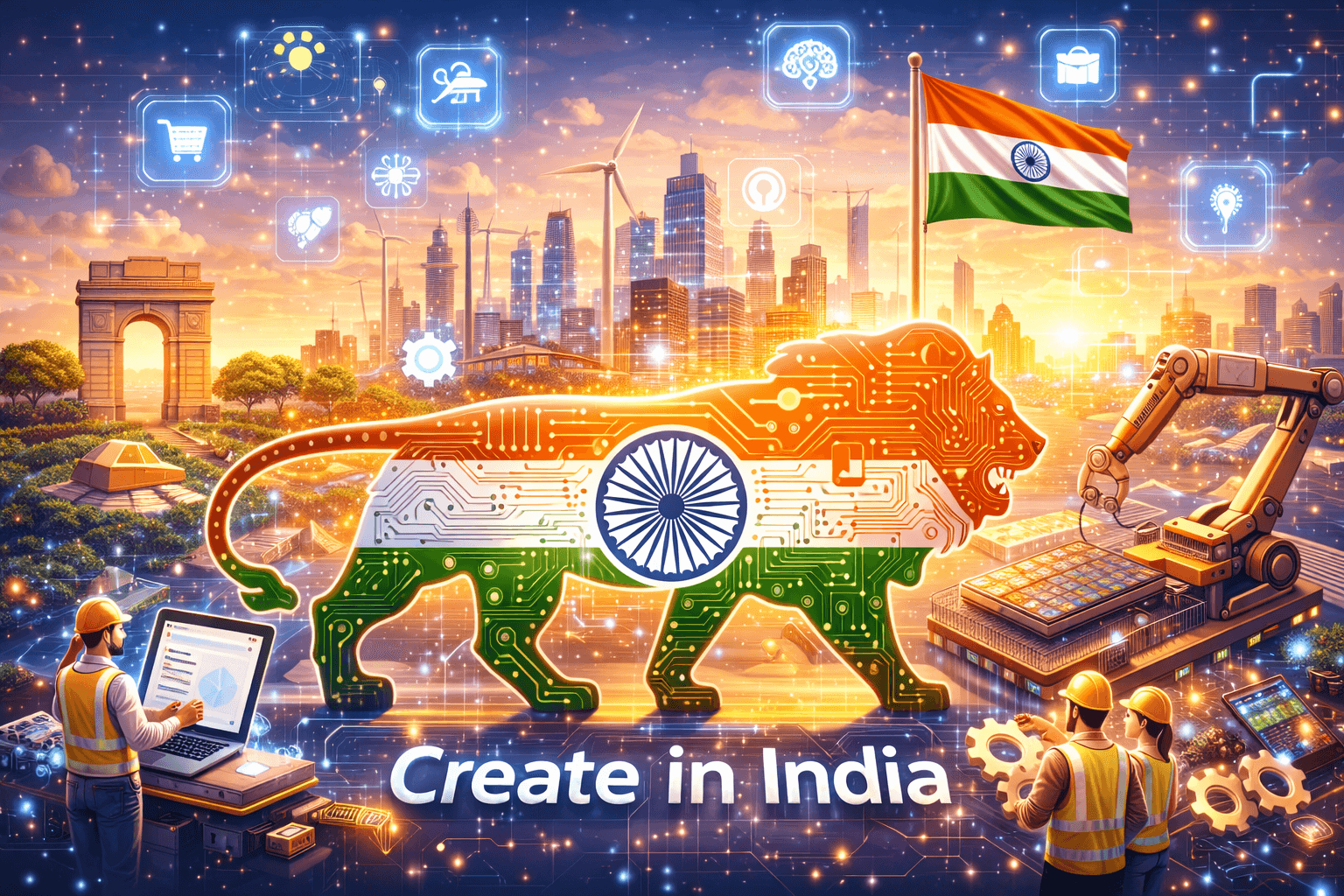 Jobs
Jobs
Govt To Launch ‘Create in India’ Mission to Boost Jobs and Industries
India plans to launch the ‘Create in India’ mission to boost jobs, strengthen industries, and expand AI-driven innova...
Read Article arrow_forward General
IIT Kanpur Launches Intensive AI & ML Certification
IIT Kanpur unveils a comprehensive certification program in AI and Machine Learning, aiming to equip professionals wi...
Read Article arrow_forward General
Anthropic AI Model Pinpoints Software Security Flaws
Anthropic's latest AI model can now expose critical weaknesses in software security, marking a significant leap in au...
Read Article arrow_forward