

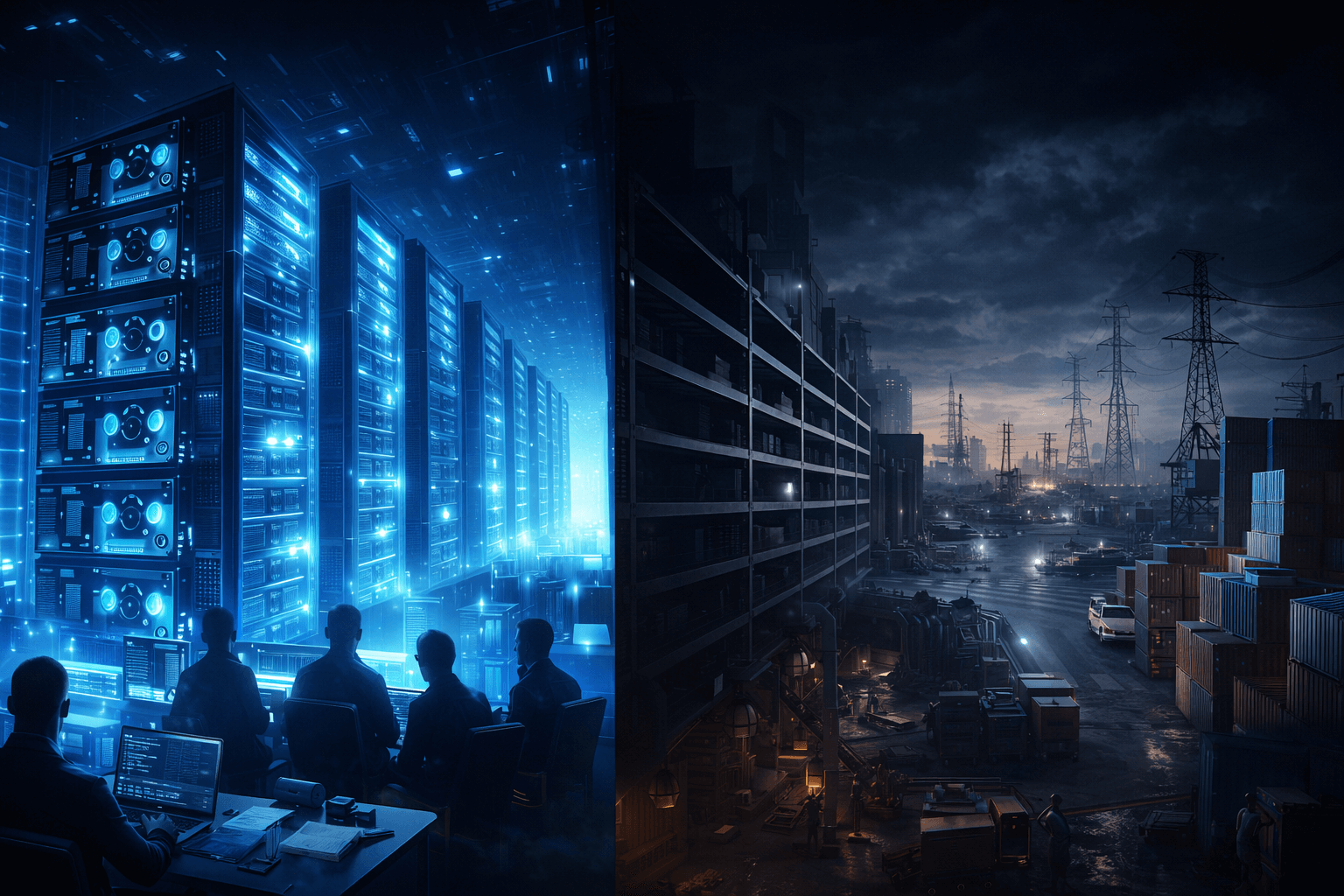
If you’ve been hearing about chip shortages again and wondering, didn’t we just fix this? Here’s the twist.
This time, it’s not smartphones or cars driving the crunch. It’s AI.
The global AI boom is so intense right now that it’s creating shortages across multiple industries from semiconductors and data centers to electricity, networking equipment, and even skilled talent. And this isn’t a future problem. It’s already happening.
What’s Fueling the AI Boom Right Now?
In the last 18 months, AI has gone from “interesting tech” to critical infrastructure.
Big tech companies, startups, governments, and enterprises are racing to deploy:
-
Generative AI models
-
AI copilots for work
-
AI-powered search and automation
-
Large-scale data processing systems
Every major player wants more computing power. And they want it now.
That demand is putting extreme pressure on global supply chains.
The Chip Shortage Is Back - But This Time It’s Different
At the center of the AI boom is one thing: advanced chips.
High-performance GPUs and AI accelerators are now the most valuable hardware on the planet. Companies are placing massive orders, sometimes years in advance, just to secure supply.
As a result:
-
AI chips are in short supply
-
Prices have surged
-
Smaller companies are being pushed out
-
Non-AI industries are struggling to get components
Industries like automotive, consumer electronics, and industrial manufacturing are feeling the squeeze again.
Data Centers Are Running Out of Everything
AI doesn’t just need chips. It needs entire ecosystems.
Modern AI models require:
-
Massive data centers
-
Advanced cooling systems
-
High-speed networking hardware
-
Continuous power supply
This has led to shortages in:
-
Servers and racks
-
Power transformers
-
Cooling infrastructure
-
Networking equipment
In some regions, data center expansion is slowing down because there simply isn’t enough electricity available.
Yes, AI is now competing with cities for power.
Power and Energy Are the Next Big Bottlenecks
AI systems consume a lot of energy. Training a single large AI model can use as much electricity as thousands of homes.
Because of this:
-
Utilities are struggling to meet demand
-
Renewable energy projects are being fast-tracked
-
Governments are stepping in to regulate usage
In some countries, new data center approvals are being delayed due to grid limitations.
The AI boom isn’t just a tech story anymore. It’s an energy story.
Talent Shortages Are Getting Worse
Hardware isn’t the only thing in short supply.
There’s also a growing shortage of:
-
AI engineers
-
Data scientists
-
Machine learning researchers
-
AI infrastructure specialists
Companies are competing aggressively for the same talent pool. Salaries are rising fast, and smaller firms are finding it harder to hire.
This talent imbalance is slowing innovation outside big tech, even as AI adoption accelerates.
Who’s Being Affected the Most?
The impact of AI-driven shortages isn’t evenly spread.
Startups
Many startups can’t afford:
-
Premium AI chips
-
Cloud compute costs
-
Long-term infrastructure contracts
This limits experimentation and innovation.
Traditional Industries
Sectors that rely on the same components like manufacturing and automotive are facing delays and higher costs.
Governments and Public Services
AI adoption in healthcare, education, and governance is being slowed by infrastructure constraints.
Why This Matters Beyond AI
The biggest risk isn’t that AI is growing fast.
It’s that everything else is being crowded out.
When resources flow heavily into one sector:
-
Supply chains become fragile
-
Innovation becomes concentrated
-
Smaller players lose access
We’ve seen this before with oil, telecom, and cloud computing. AI is now at that scale.
What Happens Next?
Experts expect:
-
Continued shortages through the next few years
-
Heavy investment in chip manufacturing
-
More regulation around energy use
-
A push for efficient, smaller AI models
Some companies are already focusing on doing more with less compute, rather than building ever-larger models.
This shift could define the next phase of AI development.
The Bigger Picture
The AI boom is real. It’s transformative. And it’s not slowing down.
But it’s also reshaping global supply chains in ways most people don’t see. From power grids to silicon fabs, the ripple effects are everywhere.
Understanding these shifts matters not just for tech leaders, but for anyone watching how technology changes the world.
At Wasupp.info, this is exactly the kind of signal we track: not hype, but real-world impact.
Suggested Articles
 General
Europe's Top 100 Influential Women in Startups & VC 2026
Discover Europe's 100 most influential women shaping the startup and venture capital landscape in 2026. Celebrating i...
Read Article arrow_forward General
Cannes AI Film Festival: Art, Algorithm, or Anomaly?
The Cannes Film Festival's embrace of AI-generated cinema sparks a global debate on creativity, technology, and the f...
Read Article arrow_forward General
Mercor's Month: $10B Startup Grapples with Data Breach Aftermath
A $10 billion-valued startup, Mercor, faces a challenging month following a significant data breach, raising question...
Read Article arrow_forward
General
India's Space Diplomacy: Tech, Challenges & Global Leadership
Explore how India leverages advanced technology and strategic alliances to navigate challenges and assert its growing...
Read Article arrow_forward