

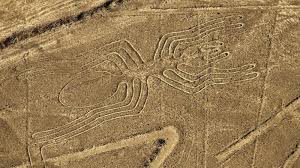
The Enigma of the Sands: Unraveling Ancient Desert Mysteries
Deserts, with their vast, harsh, and often inaccessible landscapes, have long held secrets of ancient civilizations, forgotten trade routes, and enigmatic structures. From the intricate Nazca Lines in Peru to the sprawling cities hidden beneath the sands of the Arabian Peninsula, these mysteries have challenged archaeologists for centuries. The sheer scale, the relentless elements, and the limitations of traditional exploration methods have meant that many of these historical puzzles remain unsolved. However, a powerful new tool is revolutionizing how we approach these ancient enigmas: Artificial Intelligence (AI).
AI, with its ability to process immense datasets, identify subtle patterns, and learn from existing information, is offering unprecedented capabilities to archaeologists. It's transforming the laborious and often serendipitous process of discovery into a more systematic and efficient endeavor, promising to unlock secrets that have been buried under layers of sand and time. This integration of cutting-edge technology with historical research is ushering in a new era of archaeological exploration, where the desert's most guarded secrets may finally be revealed.
The Challenges of Traditional Desert Archaeology
For generations, archaeologists have relied on painstaking ground surveys, aerial photography, and often sheer luck to locate and study ancient sites in desert environments. These methods, while foundational, come with significant limitations:
- Vastness and Inaccessibility: Deserts cover enormous areas, making comprehensive surveys extremely difficult and expensive. Many regions are remote, dangerous, or politically sensitive, restricting human access.
- Ephemeral Evidence: Wind and sand constantly shift, burying sites deep or eroding delicate structures. What might be visible one year could be gone the next.
- Logistical Hurdles: Expeditions require extensive planning, resources, and robust supply chains, often operating in extreme temperatures and with limited water.
- Human Limitations: The human eye can only process so much information. Overlooking subtle anomalies or connections across vast distances is common.
These challenges mean that countless historical sites likely remain undiscovered, offering incomplete narratives of past human activity. The potential for groundbreaking discoveries is immense, but so too are the obstacles. This is precisely where AI steps in, offering solutions to overcome these long-standing barriers.
AI's Transformative Role in Archaeological Discovery
The application of Artificial Intelligence in archaeology isn't about replacing human experts but augmenting their capabilities, allowing them to explore, analyze, and interpret data on scales previously unimaginable. Here’s how AI is making a profound impact:
1. Satellite Imagery Analysis and Remote Sensing
One of the most significant advancements comes from AI's ability to analyze vast amounts of satellite imagery and other remote sensing data. High-resolution images from space, lidar, and radar can penetrate sand and vegetation to reveal subtle topographical changes indicative of buried structures, ancient irrigation systems, or forgotten settlements. AI algorithms are trained to:
- Identify Anomalies: Machine learning models can detect patterns that deviate from natural geology, such as straight lines, geometric shapes, or variations in soil moisture, which often point to human-made features.
- Map Ancient Landscapes: AI can reconstruct ancient riverbeds, coastlines, and vegetation patterns, providing context for where early civilizations might have thrived.
- Categorize Features: Once anomalies are detected, AI can classify them based on known archaeological signatures, helping prioritize sites for further investigation.
This capability allows archaeologists to virtually survey thousands of square kilometers from a desktop, identifying potential sites faster and more efficiently than ever before. For instance, AI-powered analysis of satellite data has already led to the discovery of previously unknown geoglyphs and ancient settlements in regions like the Arabian Peninsula, providing fresh insights into human migration and settlement patterns.
2. Pattern Recognition and Data Integration
Ancient civilizations often left behind clues not just in physical structures but also in scattered artifacts, rock art, and environmental modifications. AI excels at finding connections and patterns within disparate datasets:
- Connecting Dispersed Evidence: AI can analyze geological data, soil samples, climate records, and artifact distribution maps to reveal previously unnoticed correlations, suggesting ancient trade routes, resource exploitation, or seasonal migration paths.
- Deciphering Ancient Texts and Symbols: While challenging, ongoing research explores using AI for natural language processing on undeciphered ancient scripts or symbolic systems found in desert rock art, aiming to find recurring patterns and potential meanings.
- Predictive Modeling: By understanding the environmental and social factors that influenced ancient settlement patterns, AI can predict the most likely locations for undiscovered sites, guiding ground expeditions to areas with the highest probability of success. This systematic approach reduces the cost and time associated with traditional, more random surveying.
The ability of AI to integrate and make sense of complex, multi-layered data is crucial. Just as scalable AI agents require logic and search separation for efficient processing, archaeological AI benefits from distinct data processing and pattern recognition modules.
3. Environmental Reconstruction and Climate Modeling
Understanding the ancient environment is key to understanding the cultures that inhabited it. Deserts were not always as arid as they are today; many were once wetter, supporting diverse ecosystems and populations. AI can analyze:
- Paleoclimate Data: By processing data from ice cores, sediment layers, and ancient pollen, AI models can reconstruct past climate conditions, identifying periods of increased rainfall or prolonged drought that would have impacted human settlement.
- Water Management Systems: AI can map out ancient water channels, dams, and reservoirs, even if largely eroded, helping experts understand sophisticated water management techniques employed by desert civilizations. This is crucial for understanding how societies adapted to and thrived in challenging environments.
4. Preservation, Monitoring, and Threat Detection
Even after discovery, ancient sites in deserts remain vulnerable to natural erosion, human encroachment, and looting. AI can play a vital role in their ongoing protection:
- Automated Monitoring: Drones equipped with AI can regularly survey sites, detecting changes over time, identifying signs of degradation, or illegal digging activities.
- Predicting Erosion: AI models can forecast areas most susceptible to wind erosion or flash floods, allowing for proactive preservation efforts.
- Risk Assessment: By analyzing demographic, economic, and political data alongside site locations, AI can help prioritize conservation efforts in areas most at risk.
Real-World Applications and Promising Discoveries
Across the globe, AI is already contributing to significant archaeological breakthroughs. In the Middle East, AI has been instrumental in mapping thousands of previously unknown 'desert kites' – ancient stone structures believed to be used for mass hunting. In Egypt, machine learning is being used to analyze vast archives of archaeological photographs and documents, cross-referencing information to identify patterns and connections missed by human researchers.
Furthermore, the application of AI is not limited to large-scale surveys. It's also being used in micro-archaeology, for example, in the precise dating of artifacts through material analysis or the reconstruction of fragmented pottery. This demonstrates how the AI revolution is transforming even the most traditional sectors, including those focused on understanding our ancient past.
Challenges and Ethical Considerations
While the prospects are exciting, the integration of AI into archaeology is not without its challenges:
- Data Quality and Bias: AI models are only as good as the data they are trained on. Incomplete or biased historical data could lead to skewed interpretations.
- Interpretive Nuance: AI can identify patterns, but the nuanced interpretation of historical context, cultural meaning, and human intention still requires expert human judgment.
- Accessibility and Cost: High-end AI tools and satellite data can be expensive, potentially creating a divide between well-funded institutions and smaller research groups.
- Job Evolution: As AI takes on more data-intensive tasks, the roles of archaeologists will evolve, requiring new skills in data science and computational archaeology.
It’s crucial that archaeologists and AI developers collaborate closely to ensure the tools are built ethically, transparently, and are designed to enhance human understanding rather than overshadow it.
The Future of AI in Decoding Our Ancient Past
The convergence of AI and archaeology is still in its nascent stages, but the potential is enormous. As AI technologies become more sophisticated, we can anticipate:
- Advanced Predictive Models: Even more accurate predictions of archaeological site locations, based on complex environmental, social, and economic factors.
- Robotics and Autonomous Exploration: AI-powered robots and drones capable of autonomous exploration and data collection in hazardous or inaccessible areas, reducing risk to human researchers.
- Virtual Reality and Augmented Reality Integration: AI processing data to create highly realistic 3D reconstructions of ancient sites and artifacts, allowing for immersive study and public engagement.
- Cross-Disciplinary Collaboration: Stronger partnerships between archaeologists, computer scientists, environmental scientists, and historians, fostering a truly interdisciplinary approach to understanding human history. Such collaborations mirror the trends seen with Indian IT giants partnering with AI leaders for growth, signaling a global shift towards integrated intelligence.
The vision is not of AI solving all mysteries alone, but of AI empowering archaeologists to ask bigger questions, explore broader landscapes, and uncover a richer, more detailed understanding of our shared human heritage. As the sands of time continue to shift, AI stands ready to help us peer deeper into the past, revealing the untold stories of ancient civilizations that once thrived in the heart of the world's most desolate landscapes.
Suggested Articles
 General
Anthropic Products Fully Operational After Brief Outage
Anthropic's AI products, including Claude, are fully operational following a brief service disruption, highlighting t...
Read Article arrow_forward
General
Bodyo: Growing Headless Human Bodies & 'No Brain, No Limits'
A billionaire-backed startup, Bodyo, is reportedly growing headless human bodies, raising profound ethical questions ...
Read Article arrow_forward General
DeepSeek Unveils New AI Models, Shaking Up Global Tech
China's DeepSeek has launched its latest AI models, DeepSeek-V2 and DeepSeek Coder V2, a year after disrupting the gl...
Read Article arrow_forward General
AI-Powered Cyber Heist: Mexico Suffers Massive Data Breach
Hackers leveraging artificial intelligence have reportedly stolen hundreds of millions of Mexican government and priv...
Read Article arrow_forward