

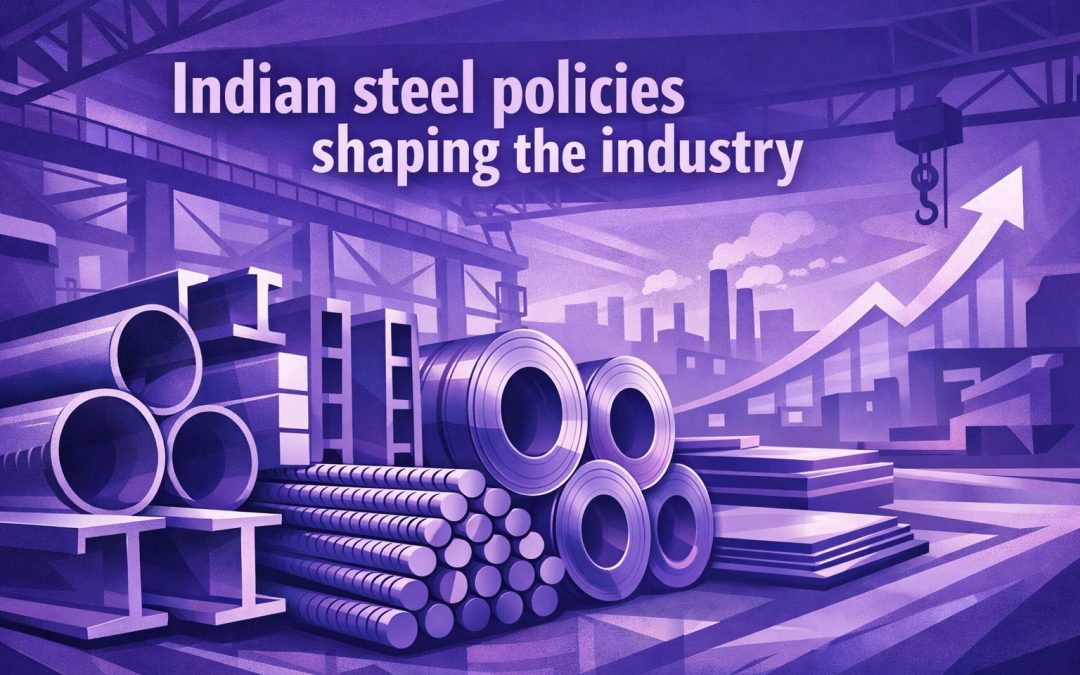
The Crucible of Progress: India's Steel Sector on a Transformative Path
The Indian steel sector stands at a critical juncture, poised for unprecedented growth and transformation. As one of the foundational pillars of the nation's economy, its trajectory directly impacts infrastructure development, manufacturing capabilities, and overall industrial prowess. However, merely increasing production is no longer sufficient. The global landscape demands sustainability, efficiency, and a commitment to innovation. India's steel industry is responding to this call by strategically aligning robust governmental policies, advanced technological adoption, and a clear, purpose-driven vision for a greener, more competitive future.
This comprehensive approach is not just about meeting domestic demand but also about establishing India as a global leader in sustainable and technologically advanced steel production. The journey involves intricate coordination between various stakeholders, significant capital investments, and a proactive embrace of global best practices.
The Foundation: India's Growing Steel Ambition
India is currently the world's second-largest producer of crude steel, a testament to its burgeoning industrial base and ambitious infrastructure projects. With a massive population and rapid urbanization, the demand for steel in sectors like construction, automotive, and capital goods continues to escalate. The government's vision of a 5 trillion USD economy heavily relies on a strong manufacturing sector, with steel playing a pivotal role.
The target set by the National Steel Policy of achieving 300 million tonnes of crude steel capacity by 2030-31 underscores this ambition. This growth, however, must be coupled with responsible practices. The focus is shifting from simply 'more' to 'better' – better quality, better efficiency, and better environmental stewardship.
Policy Pushing Progress: Government Initiatives
Government policies are the bedrock upon which the steel sector's transformation is built. These policies aim to create a conducive environment for investment, innovation, and sustainable practices, ensuring that the industry's growth aligns with national objectives.
National Steel Policy (NSP) 2017
The NSP 2017 is a landmark framework designed to provide strategic direction to the Indian steel sector. Its primary objectives include increasing domestic steel consumption, promoting high-value steel production, ensuring raw material security, and enhancing cost competitiveness. The policy also emphasizes research and development (R&D) and skill development to keep pace with technological advancements.
Key pillars of the NSP include:
- Capacity Augmentation: Aiming for 300 million tonnes of crude steel capacity.
- Self-Sufficiency: Reducing dependence on steel imports, especially for specialty steels.
- Raw Material Security: Promoting domestic mining and efficient utilization of iron ore, coking coal, and other critical inputs.
- Technological Upgradation: Encouraging adoption of energy-efficient and environment-friendly technologies.
- Green Steel Promotion: Focusing on reducing the carbon footprint of steel production.
Production-Linked Incentive (PLI) Scheme
In a significant boost to the manufacturing sector, the government extended the Production-Linked Incentive (PLI) scheme to the specialty steel sector. This scheme, with an outlay of approximately 6,322 crore INR, aims to incentivize the production of high-grade specialty steel within India. The PLI scheme is crucial for:
- Value Addition: Moving up the value chain from basic steel to advanced, specialty products.
- Import Substitution: Reducing India's reliance on imports of specialty steel products, which are critical for defense, automotive, and energy sectors.
- Technological Leap: Encouraging companies to invest in advanced technologies and R&D for specialty steel manufacturing.
- Job Creation: Stimulating economic activity and creating employment opportunities in the sector.
Such policy interventions are vital in steering industries towards strategic national goals. For more insights into how government initiatives are fostering industrial growth and employment, you might be interested in knowing that the government is set to launch a 'Create in India' mission to boost jobs and industries across various sectors.
Technological Transformation: The Digital & Green Leap
Technology is the engine driving efficiency, quality, and sustainability in the modern steel industry. Indian steel manufacturers are increasingly embracing Industry 4.0 concepts, digitalization, and green technologies to remain competitive and meet environmental mandates.
Industry 4.0 and Automation
The integration of advanced analytics, Artificial Intelligence (AI), machine learning, and the Internet of Things (IoT) is revolutionizing steel production. Smart factories leverage data from sensors and interconnected systems to optimize processes, predict maintenance needs, and enhance quality control. This leads to:
- Enhanced Efficiency: Real-time monitoring and control reduce energy consumption and raw material wastage.
- Predictive Maintenance: AI-driven analytics prevent costly breakdowns, ensuring higher operational uptime.
- Improved Quality: Precision control in every stage, from raw material handling to finished product, ensures consistent quality.
- Worker Safety: Automation of hazardous tasks reduces risks for human operators.
The steel industry, traditionally labor-intensive, is undergoing a significant shift, demanding a skilled workforce capable of operating and maintaining these advanced systems. This transformation is not unique to steel; many sectors are exploring how India extends recognition period for deeptech startups, indicating a broader national push for advanced technological integration.
Decarbonization and Green Steel
The steel industry is one of the largest emitters of carbon dioxide globally. India's commitment to climate change mitigation necessitates a strong focus on decarbonization. This involves:
- Energy Efficiency: Implementing waste heat recovery systems, energy-efficient furnaces, and process optimization.
- Renewable Energy Integration: Shifting towards solar, wind, and other renewable sources to power steel plants.
- Carbon Capture, Utilization, and Storage (CCUS): Investing in technologies to capture CO2 emissions and either store them or use them in other industrial processes.
- Hydrogen-Based Steelmaking: Exploring green hydrogen as a reducing agent instead of coking coal, a revolutionary step towards truly green steel. While nascent in India, pilot projects are underway to assess its feasibility and scalability.
- Increased Scrap Utilization: Promoting a circular economy by maximizing the use of recycled steel scrap, which significantly reduces energy consumption and emissions compared to primary steel production.
These initiatives are crucial for the long-term sustainability and global acceptance of Indian steel, allowing it to compete in markets increasingly prioritizing environmental credentials.
Purpose-Driven Growth: Sustainability and Self-Reliance
Beyond policies and technology, a profound sense of purpose is guiding the Indian steel sector. This purpose encompasses environmental stewardship, economic contribution, and fostering self-reliance (Atmanirbhar Bharat).
Environmental Stewardship
The industry recognizes its responsibility towards the environment. Reducing pollution, minimizing waste generation, and conserving natural resources are now integral to business strategies. Companies are investing in advanced pollution control equipment, water recycling plants, and adopting sustainable mining practices. The goal is to move towards a circular economy where waste is minimized, and resources are optimally utilized.
Economic Impact & Job Creation
The steel sector is a significant employer, both directly and indirectly. Its growth fuels ancillary industries and creates numerous job opportunities across the value chain, from mining to manufacturing and logistics. A thriving steel industry contributes substantially to the nation's GDP and supports livelihoods in various regions. The push for specialty steel production and technological advancement will create demand for a more skilled workforce, necessitating investment in training and education programs.
Global Competitiveness and Self-Reliance
The ultimate purpose is to make India's steel sector globally competitive and self-reliant. By producing high-quality, cost-effective, and environmentally sustainable steel, India can reduce its import dependence, strengthen its manufacturing base, and become a net exporter of value-added steel products. This aligns with the 'Make in India' initiative, ensuring that the nation's core industrial needs are met domestically, securing economic sovereignty and fostering national pride.
Challenges and the Road Ahead
Despite the optimistic outlook, the Indian steel sector faces several challenges:
- Capital Investment: The transition to green steel and advanced technologies requires massive capital investments. Access to affordable financing and favorable investment policies are crucial.
- Raw Material Security: While India has significant iron ore reserves, the availability of high-quality coking coal remains a challenge, necessitating imports. Developing alternative reducing agents and improving beneficiation techniques for domestic coal are ongoing efforts.
- Skill Gap: The rapid technological shift demands a highly skilled workforce, leading to a potential skill gap that needs to be addressed through robust training and educational programs.
- Global Economic Volatility: The steel industry is highly sensitive to global economic cycles, trade protectionism, and geopolitical events, which can impact demand and prices.
- Environmental Regulations: Meeting increasingly stringent environmental norms requires continuous innovation and investment in cleaner technologies.
Addressing these challenges requires sustained collaboration between the government, industry players, research institutions, and the financial sector. The success of India's steel sector will not only power its own economic aspirations but also serve as a model for sustainable industrial development globally.
Conclusion
The alignment of policy, technology, and purpose is forging a new identity for the Indian steel sector. Through strategic governmental support, a proactive embrace of cutting-edge technologies like Industry 4.0 and decarbonization techniques, and a clear vision for sustainability and self-reliance, India is steering its steel industry towards a future of robust growth and global leadership. This transformative journey is critical not just for the industry itself, but for the broader economic and environmental future of the nation, solidifying steel's role as a true backbone of progress. For more articles like this, consider exploring our posts section.
Suggested Articles
 General
An AI Bot's Manchester Party: A Glimpse into the Future
I received an unexpected invite to an AI-hosted party in Manchester. What followed was a night blending technology, h...
Read Article arrow_forward General
Indian Army Unveils Strategic Tech Roadmap for Drones in Delhi
The Indian Army has launched a comprehensive technology roadmap for Unmanned Aerial Systems (UAS) in New Delhi, empha...
Read Article arrow_forward General
The Age-Old Urge to Destroy Technology: A Human Paradox
Explore the fascinating psychological and societal reasons behind humanity's persistent urge to destroy technology, f...
Read Article arrow_forward General
APSCHE's AI Faculty Development: Bridging Academia & Industry
APSCHE launches a faculty development program focused on discipline-specific AI applications, empowering educators an...
Read Article arrow_forward