

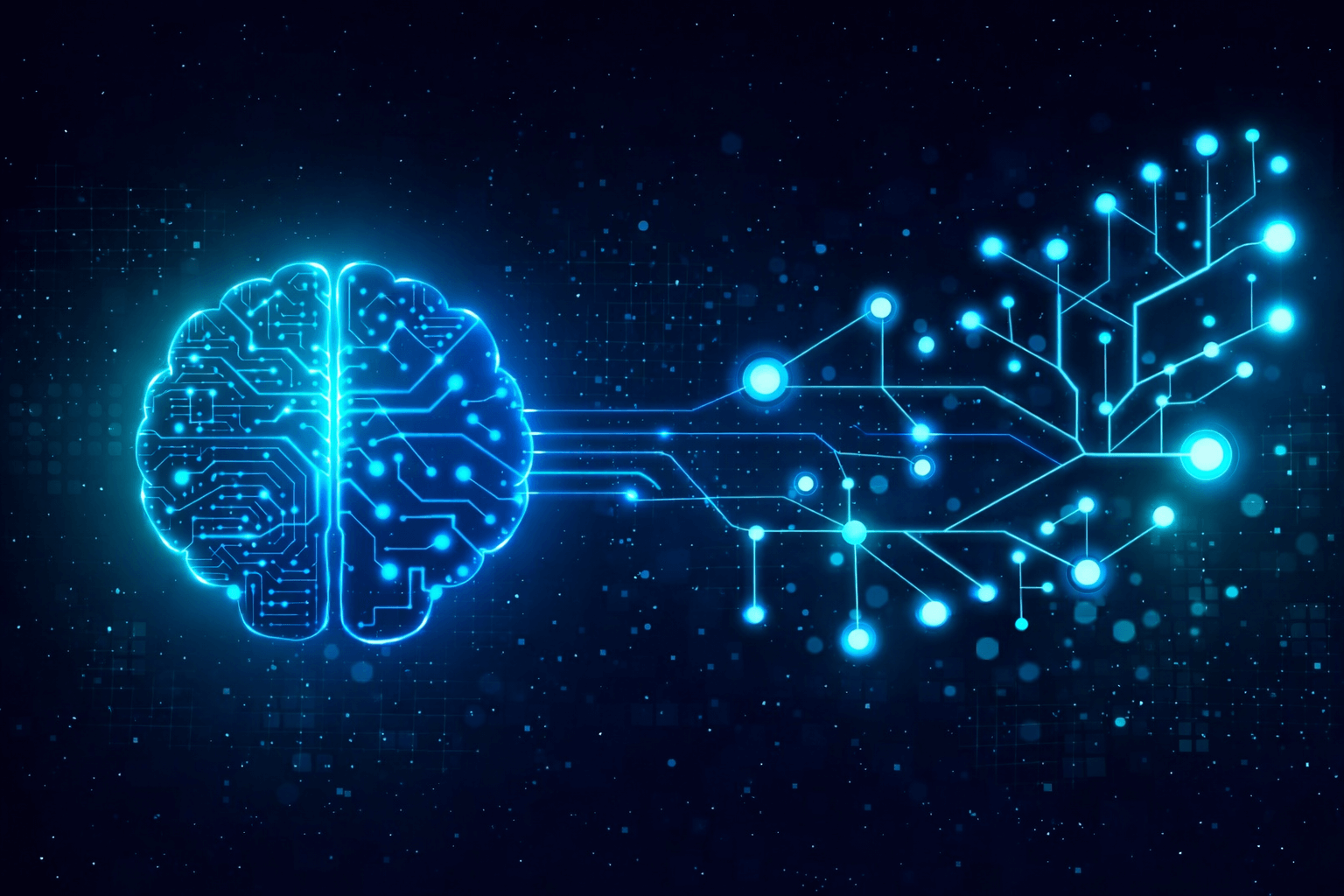
The Dawn of Unprecedented System Analysis: A New AI Paradigm
In the relentless pursuit of digital perfection and unbreachable security, a new frontier in Artificial Intelligence has emerged. Imagine a system so sophisticated it can proactively identify and exploit vulnerabilities not just in isolated applications, but across entire networks, complex infrastructures, and even human-centric processes. This isn't science fiction; it's the promise of the newest AI model, a groundbreaking development poised to revolutionize how we understand, secure, and build digital environments. This AI represents a fundamental shift from reactive defense to proactive vulnerability discovery, challenging the very notion of an impenetrable system.
For decades, cybersecurity has largely been a game of cat and mouse, with defenders scrambling to patch vulnerabilities after they've been discovered, often by malicious actors. This new AI model flips the script, acting as an omnipresent, tireless digital detective, capable of finding the 'holes' before they become catastrophic breaches. Its advent heralds a new era where systems are not just designed for functionality but are rigorously and continuously scrutinized by an intelligent entity with an almost human-like intuition for weakness, backed by unparalleled computational power.
Defining 'Holes in Every System'
When we talk about 'holes in every system,' we're referring to the myriad vulnerabilities that plague modern technology. These aren't just simple bugs or coding errors, though those are certainly included. They encompass a vast spectrum of weaknesses:
- Software Vulnerabilities: Flaws in code, logic errors, buffer overflows, injection flaws (SQL, command), cross-site scripting (XSS), and insecure deserialization, among others.
- Hardware Vulnerabilities: Design flaws in chips, firmware weaknesses, side-channel attacks, and physical tampering points.
- Network Vulnerabilities: Misconfigurations, open ports, weak encryption protocols, unsecured APIs, and unpatched network devices.
- Configuration & Operational Errors: Default passwords, unnecessary services running, improper access controls, and human error in system setup.
- Logical Flaws: Subtle weaknesses in how systems are designed to interact, which can be exploited even if individual components are secure. These are often the hardest for traditional scanners to detect.
- Supply Chain Risks: Vulnerabilities introduced through third-party components, libraries, or services that are integrated into a larger system.
The challenge has always been the sheer volume and complexity of these potential weaknesses. A typical enterprise network can have millions of lines of code, thousands of interconnected devices, and countless configurations. Manually finding all these 'holes' is an impossible task, and even automated scanners often miss the subtle, contextual vulnerabilities that require a deeper understanding of system logic and interactions.
The Evolution of AI in Cybersecurity
Artificial Intelligence is no stranger to cybersecurity. For years, AI and machine learning (ML) have been deployed in various capacities to bolster defenses:
- Anomaly Detection: Identifying unusual network traffic patterns, login attempts, or user behaviors that could signal an attack.
- Malware Analysis: Classifying new and evolving threats by analyzing their characteristics and behaviors.
- Threat Intelligence: Processing vast amounts of global threat data to predict future attack vectors and identify emerging campaigns.
- Automated Incident Response: Orchestrating defensive actions, such as isolating infected machines or blocking malicious IP addresses, in real-time.
However, these applications have largely focused on detecting known threats or identifying deviations from established baselines. The newest AI model takes a monumental leap forward. Instead of simply reacting to threats or identifying anomalies, it actively seeks out and understands the vulnerabilities themselves, much like a seasoned ethical hacker, but with far greater speed, scale, and consistency. This proactive approach shifts the paradigm from merely recognizing danger to predicting and neutralizing it before it can be exploited.
How This New AI Model Operates
This advanced AI model integrates several cutting-edge techniques to achieve its unparalleled capability:
- Deep Learning and Advanced Pattern Recognition: It processes colossal datasets of code, network traffic, system logs, and exploit databases. Through sophisticated neural networks, it learns to identify not just known patterns of vulnerability but also subtle, previously unobserved correlations that indicate potential weaknesses. It can 'read' and understand code with a contextual awareness that far surpasses traditional static analysis tools.
- Autonomous Penetration Testing: Unlike human penetration testers who work with limited time and resources, this AI can conduct continuous, automated ethical hacking. It probes systems, attempts various attack vectors, and creatively combines different vulnerabilities to achieve a breach, mimicking the tactics of the most advanced human adversaries. It doesn't just find a vulnerability; it validates its exploitability.
- Intelligent Fuzzing and Code Analysis: The AI excels at generating unexpected inputs to software (fuzzing) to crash programs or uncover hidden execution paths. Combined with deep static and dynamic code analysis, it can pinpoint the exact lines of code responsible for a vulnerability, suggesting precise fixes.
- Contextual Understanding and System Mapping: A key differentiator is its ability to build a comprehensive, real-time map of an entire system's architecture, including interdependencies between components, data flows, and access controls. This allows it to identify complex, multi-stage attack paths that involve chaining together several minor vulnerabilities to achieve a major breach.
- Predictive Vulnerability Identification: By analyzing past vulnerabilities, emerging threat landscapes, and developmental patterns in new code, the AI can predict where future weaknesses are most likely to appear, allowing for preemptive hardening.
Furthermore, with the increasing sophistication of AI models, the very systems designed to be intelligent can harbor vulnerabilities. Recognizing this, efforts are underway to build more robust detection mechanisms, such as when Microsoft develops a scanner to detect AI backdoor 'sleeper agents' in large language models, a testament to the complex security challenges within AI itself.
Revolutionizing Software Development and Quality Assurance
The introduction of this AI model is set to fundamentally change the software development lifecycle (SDLC) and quality assurance (QA) processes:
- Shift-Left Security: Instead of security being an afterthought, this AI can integrate directly into the development pipeline, providing real-time vulnerability feedback to developers as they write code. This enables security issues to be addressed at the earliest, most cost-effective stage.
- Continuous Vulnerability Management: Systems are never truly 'secure'; they are always in a state of flux. This AI offers continuous, autonomous scanning and testing, ensuring that new vulnerabilities introduced by updates, patches, or configuration changes are immediately identified.
- Proactive Patching and Remediation: By predicting and identifying vulnerabilities before they become public or exploited, organizations can implement patches and countermeasures proactively, significantly reducing their exposure to zero-day attacks.
- Automated Code Review: The AI can perform exhaustive code reviews, identifying not only security flaws but also potential performance bottlenecks, architectural weaknesses, and adherence to coding standards, far more efficiently than human teams.
Impact on the Cybersecurity Landscape
The implications for the broader cybersecurity landscape are profound and multifaceted. This new AI model will undoubtedly empower defenders, but it also raises new questions and challenges.
- Empowering Defenders: For organizations, this AI levels the playing field against increasingly sophisticated and well-funded attackers. Small and medium-sized businesses, often lacking dedicated security teams, could gain access to enterprise-grade vulnerability detection.
- Rethinking 'Zero-Trust': The principle of 'never trust, always verify' will become even more critical. With an AI constantly probing for weaknesses, every component, user, and interaction must be rigorously validated, reinforcing the need for granular access controls and continuous authentication.
- The AI Arms Race: While immensely beneficial for defense, the underlying technology could theoretically be adapted for offensive purposes. This necessitates a heightened awareness of the potential for malicious AI to escalate the cyber arms race, making the development of defensive AI even more critical.
- Market Dynamics: The demand for such advanced AI security tools will surge, potentially reshaping the cybersecurity market. Indeed, we've seen how sudden shifts and disruption fears around advanced AI capabilities, like those from Anthropic, can impact the industry, sometimes leading to cybersecurity stocks falling amid Anthropic AI disruption fears. This new model will drive further innovation and investment in AI-driven security solutions.
Ethical Implications and Guardrails
With great power comes great responsibility. An AI capable of finding holes in every system presents significant ethical considerations:
- The Dual-Use Dilemma: Like any powerful technology, this AI has dual-use potential. While designed for defensive purposes, its core capabilities could theoretically be leveraged by state-sponsored actors or sophisticated criminal organizations for offensive cyber operations. Strict controls on its development, distribution, and use are paramount.
- Human Oversight is Paramount: While autonomous, the AI should function as a tool to augment human security experts, not replace them. Human judgment is essential for prioritizing vulnerabilities, understanding context, and making ethical decisions in remediation. A 'human in the loop' approach is vital to prevent unintended consequences or the exploitation of vulnerabilities without proper authorization.
- Regulation and Responsible Deployment: Governments and international bodies will need to consider frameworks and regulations to govern the deployment of such powerful AI. This includes defining ethical guidelines, ensuring accountability, and establishing protocols for handling discovered vulnerabilities responsibly.
- Transparency and Explainability: Understanding how the AI identifies vulnerabilities is crucial. 'Black box' AI models can be problematic; explainable AI (XAI) is needed to build trust and allow human analysts to validate its findings and learn from its insights.
Beyond Software: Addressing Complex Infrastructures
The reach of this AI model extends far beyond conventional software applications. Its ability to understand complex systems makes it invaluable for securing critical infrastructure:
- Critical Infrastructure: Power grids, water treatment plants, transportation systems, and telecommunications networks are increasingly digitized and interconnected. Vulnerabilities in these systems could have devastating real-world consequences. This AI can continuously monitor and test these vast, complex environments, identifying weaknesses before they can be exploited.
- Financial Systems: In an industry where seconds can mean millions of USD, detecting vulnerabilities in high-frequency trading platforms, banking software, and payment gateways is critical. The AI can analyze algorithmic trading strategies for subtle logical flaws or identify fraud patterns that traditional systems miss.
- National Security and Defense: For government and defense agencies, protecting classified information and critical operational systems is a top priority. This AI can provide an unparalleled defensive capability against nation-state attacks and cyber espionage, identifying weaknesses in advanced weaponry systems or intelligence networks.
- Healthcare Systems: With the digitalization of patient records and medical devices, the healthcare sector is a prime target for cyberattacks. This AI can help secure sensitive patient data and ensure the integrity of life-critical medical equipment.
This technological leap isn't happening in a vacuum; it’s part of a broader trend where Indian IT giants partner with OpenAI and Anthropic to drive AI-led growth, reflecting a global commitment to leveraging AI for strategic advantage, whether in business optimization or, as in this case, advanced security.
Challenges and the Road Ahead
Despite its immense promise, deploying this new AI model at scale presents several challenges:
- Complexity of Modern Systems: As systems become more distributed, cloud-native, and interconnected, the attack surface expands exponentially. The AI must continuously adapt to new architectures, protocols, and technologies.
- The AI vs. AI Arms Race: As defensive AI becomes more sophisticated, so too will offensive AI developed by adversaries. This creates an ongoing arms race where both sides constantly evolve their intelligent agents.
- Cost and Accessibility: Developing and deploying such advanced AI models requires significant computational resources, specialized expertise, and substantial investment. Ensuring that this technology is accessible to a wide range of organizations, not just large corporations or governments, will be crucial for overall global cybersecurity.
- Skill Gap: While the AI can identify vulnerabilities, human security professionals are still needed to interpret its findings, prioritize risks, develop remediation strategies, and handle complex ethical dilemmas. Training a new generation of 'AI-augmented' cybersecurity experts will be essential.
- False Positives and Negatives: Even the most advanced AI is not infallible. Managing false positives (incorrectly identified vulnerabilities) and minimizing false negatives (missed vulnerabilities) will be an ongoing challenge requiring continuous refinement and human oversight.
Conclusion: A New Era of Resilience or a New Frontier of Risk?
The newest AI model, capable of picking holes in every system, stands as a testament to humanity's enduring quest for technological advancement and security. It offers an unprecedented opportunity to build more resilient, secure, and trustworthy digital environments. By shifting from reactive patching to proactive vulnerability discovery, it promises to fundamentally alter the cybersecurity landscape, making our digital world safer from a myriad of threats.
However, its power also brings significant responsibilities. The ethical deployment, robust regulation, and careful human oversight of such a formidable tool will determine whether this AI ushers in an era of unparalleled digital resilience or opens a new, more complex frontier of risk. As we embrace this powerful innovation, our collective challenge will be to harness its potential for good, ensuring that it remains a shield for progress, not a weapon of disruption.
Suggested Articles
 General
AI & Planet Hunting: Reshaping Exoplanet Discovery
Artificial Intelligence is revolutionizing the search for exoplanets, enabling astronomers to process vast datasets a...
Read Article arrow_forward General
AI: Transforming Indian Agriculture for a Sustainable Future
Discover how Artificial Intelligence is revolutionizing Indian agriculture, enhancing crop yields, optimizing resourc...
Read Article arrow_forward General
AI Digital Assistants: Convenience vs. Critical Risks
Exploring the transformative potential of AI bots as personal digital assistants and the significant privacy, securit...
Read Article arrow_forward Fintech
IPO-Bound Infra.Market Plans Rs. 1,250 Cr Debt Raise Ahead of Public Listing
Infra.Market plans to raise Rs. 1,250 crore in debt funding ahead of its IPO, strengthening its financial position an...
Read Article arrow_forward