

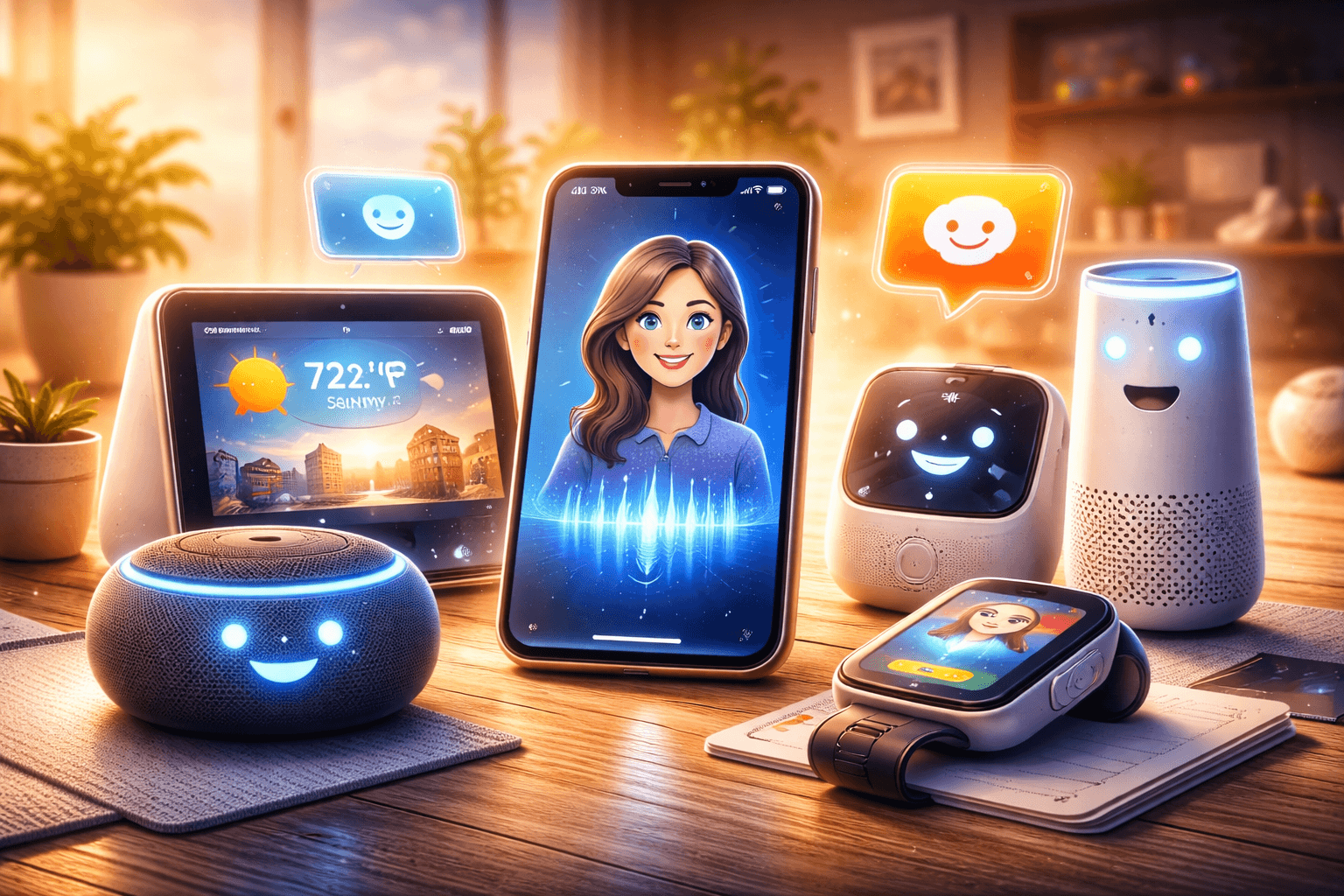
Remember when talking to your phone felt awkward?
You had to repeat commands. Use exact phrases. Speak like a robot just to get a simple task done.
That era is ending.
Thanks to rapid advances in AI assistants, natural language processing (NLP), and large language models, our gadgets are starting to understand us the way humans do. And that shift is bigger than it looks.
This is not just a software update. It’s a redesign of how humans interact with technology.
What Does “Gadgets Speak Human” Actually Mean?
For years, digital assistants relied on rigid command structures.
You had to say:
-
“Set alarm for 7 AM.”
-
“Call Rahul mobile.”
-
“Play music on Spotify.”
Now, you can say:
-
“Wake me up early tomorrow.”
-
“Call Rahul, the one from office.”
-
“Play something relaxing.”
And it works.
That’s the power of conversational AI and advanced voice recognition. Devices now interpret context, tone, and intent, not just keywords.
The Technology Behind This Shift
Several breakthroughs made this possible:
1. Large Language Models (LLMs)
Modern AI systems can understand context, generate natural responses, and handle complex queries.
2. Improved Speech Recognition
Voice systems now process accents, pauses, and natural speech patterns far better than before.
3. On-Device AI Processing
Many smartphones now run AI models locally, improving speed and privacy.
Together, these technologies make interactions smoother, faster, and more intuitive.
Why This Changes Everything
This shift impacts more than just smart speakers.
Smartphones
Your phone can now summarize notifications, draft replies, and answer complex questions conversationally.
Smart Homes
Lights, thermostats, and appliances respond to flexible voice instructions instead of strict commands.
Cars
In-car assistants are becoming more conversational, helping drivers navigate, message, and control features hands-free.
Wearables
Smartwatches are turning into mini AI companions rather than simple notification devices.
This is a move from command-based tech to conversation-based tech.
From Tools to Companions
There’s a psychological shift happening.
When devices understand context and respond naturally, they feel less like tools and more like assistants.
You’re not “using” technology anymore. You’re interacting with it.
That changes:
-
User expectations
-
Product design
-
Customer experience strategies
Companies now compete on how natural their AI feels, not just how powerful it is.
What This Means for Privacy and Control
With greater intelligence comes greater responsibility.
As gadgets become more conversational, they:
-
Process more data
-
Analyze speech patterns
-
Interpret personal context
This raises questions about:
-
Data privacy
-
On-device vs cloud processing
-
Transparency in AI responses
Governments and regulators worldwide are already working on frameworks to manage this shift responsibly.
The Future: Ambient AI Everywhere
The next step is ambient intelligence.
Instead of you activating your device, it may anticipate needs based on patterns and context.
Imagine:
-
Your phone suggesting a call before you ask
-
Your home adjusting lighting based on mood
-
Your laptop summarizing meetings automatically
This isn’t science fiction. It’s already being tested.
Why This Moment Feels Different
We’ve had voice assistants for over a decade. But they often felt limited.
This time, the improvement is fundamental.
Devices aren’t just recognizing words. They’re understanding meaning.
And once technology crosses that line, going back feels impossible.
The Bigger Picture
When gadgets speak human, technology becomes more accessible.
It helps:
-
Older users who struggle with complex interfaces
-
People with disabilities
-
Users who prefer voice over typing
It reduces friction. And friction is what often limits adoption.
This shift could be as transformative as the touchscreen era.
Final Takeaway
We’re entering a world where interaction with technology feels natural, not mechanical.
Our gadgets speaking human isn’t just a convenience. It’s a redesign of the human-tech relationship.
And once you experience truly conversational AI, old-style interfaces feel outdated.
At Wasupp.info, this is exactly the kind of change worth tracking. Not hype. Not buzz. But real shifts in how we live and work.
Suggested Articles
 General
Apple at 50: A Legacy of Innovation, Triumph, and Missteps
Explore Apple's remarkable 50-year journey, from its humble garage origins to becoming a global tech titan, examining...
Read Article arrow_forward General
AI Robotics Lab Nears $1 Billion Funding, $11 Billion Valuation
A leading AI Robotics Lab is reportedly close to securing USD 1 billion in new funding, propelling its valuation to a...
Read Article arrow_forward General
UPSC Key: Induction Cooking, Western Disturbances & TFR Explained
Delve into critical UPSC topics: Induction Cooking Technology, Western Disturbances' impact on India, and Total Ferti...
Read Article arrow_forward General
India AI Summit 2026: Global Declaration & Investment Surge
India's AI Impact Summit 2026 concluded with a landmark global declaration and significant investment commitments, so...
Read Article arrow_forward