

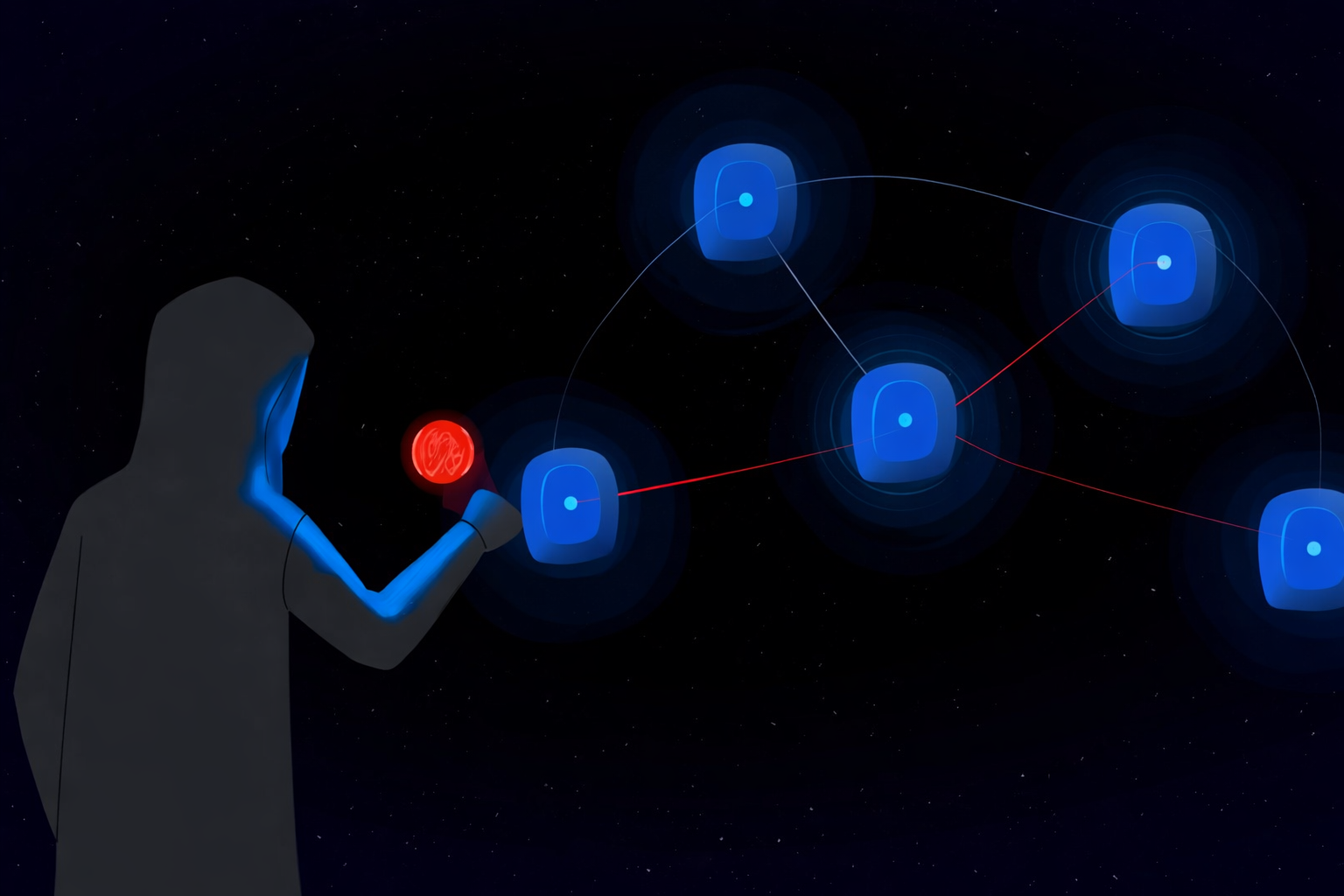
Introduction: The Unseen Eye of AI and the American Public
The rise of Artificial Intelligence (AI) has ushered in an era of unprecedented technological capability, transforming industries from healthcare to defense. While AI promises advancements, it also ignites profound debates, particularly when its application touches upon sensitive areas like government surveillance of its own citizens. The question of whether the Pentagon, the operational heart of the United States' military, is allowed to surveil Americans with AI is not merely a legal query but a constitutional and ethical dilemma that probes the very foundations of privacy, freedom, and national security.
At the core of this debate lies a fundamental tension: the government's imperative to protect national security against evolving threats, and the bedrock constitutional rights of American citizens, particularly the Fourth Amendment's protection against unreasonable searches and seizures. AI, with its capacity for rapid data processing, facial recognition, predictive analytics, and vast information aggregation, presents tools that could dramatically enhance defense capabilities but also potentially erode civil liberties in unforeseen ways. This article will explore the legal frameworks, technological capabilities, ethical considerations, and societal implications surrounding the Pentagon's use of AI for domestic surveillance.
The Legal Labyrinth: Existing Laws and AI's Grey Areas
The primary legal barrier preventing the military from engaging in domestic law enforcement activities, including surveillance, is the Posse Comitatus Act of 1878. This act generally prohibits the use of the U.S. armed forces to enforce domestic laws unless expressly authorized by the Constitution or Congress. While there are exceptions, such as in cases of disaster relief or specific anti-terrorism operations, the spirit of the law aims to maintain a clear separation between military and civilian functions.
However, AI introduces complexities that challenge traditional interpretations. Is passive data collection by AI, even if it targets Americans, considered active “enforcement”? What if the AI systems are developed by the Pentagon but ostensibly used by civilian agencies, or vice-versa? Furthermore, intelligence gathering by military entities abroad often collects data on Americans inadvertently, which then enters intelligence databases. The use of AI to sift through this “incidental collection” to identify and analyze American citizens' activities raises significant Fourth Amendment concerns, especially without a warrant.
Other relevant legal frameworks include the Foreign Intelligence Surveillance Act (FISA), which governs electronic surveillance and physical searches for foreign intelligence purposes. While FISA primarily targets foreign powers and agents, it has provisions for incidental collection on U.S. persons and requires specific procedures and court oversight for analyzing such data. The advent of AI, capable of processing unimaginable volumes of data at speeds impossible for human analysts, strains these existing legal and oversight mechanisms. The definitions of “surveillance” and “search” themselves are being re-evaluated in the digital age, particularly when AI can infer patterns and make predictions from publicly available data that, when combined, reveal deeply private aspects of individuals' lives.
AI's Transformative Power in Surveillance
Artificial intelligence offers capabilities that fundamentally alter the landscape of surveillance. These include:
- Facial Recognition and Biometrics: AI systems can identify individuals from vast databases of images and videos, often in real-time. This capability can track movements, identify associations, and even infer emotional states, posing a direct threat to anonymity in public spaces.
- Predictive Analytics: By analyzing historical data, AI can identify patterns and predict future behaviors or threats. While useful for preventing crime or attacks, its application to American citizens raises concerns about “pre-crime” scenarios and algorithmic bias targeting specific communities.
- Data Aggregation and Fusion: AI can rapidly combine disparate data sources – from social media posts and public records to commercial databases and sensor data – to create comprehensive profiles of individuals, often without their knowledge or consent. This is particularly concerning when considering how the military might acquire and process data initially collected by civilian entities or private companies.
- Language Processing and Sentiment Analysis: Advanced AI can monitor and analyze communications across multiple languages, identifying keywords, sentiments, and potential threats in spoken and written exchanges.
- Autonomous Monitoring Systems: Drones, robots, and other autonomous systems equipped with AI can conduct surveillance operations with minimal human intervention, expanding the reach and persistence of monitoring.
These capabilities, while invaluable for military operations abroad or in defined combat zones, become contentious when directed at a domestic population. The sheer scale and non-transparent nature of AI-driven data collection and analysis make it difficult for individuals to know if, how, or why they are being monitored.
The Pentagon's Imperative: National Security in an Evolving Threat Landscape
From the Pentagon's perspective, the use of AI is not merely an option but a strategic necessity. The global threat landscape is increasingly complex, encompassing state-sponsored cyber-attacks, sophisticated terrorist networks, and the proliferation of weapons of mass destruction. To effectively counter these threats and strengthen defense capabilities, the military argues it must leverage the most advanced technologies available, including AI.
Arguments in favor of AI-powered surveillance often include:
- Counter-Terrorism: Identifying and disrupting plots before they materialize.
- Cybersecurity: Detecting and neutralizing cyber threats against critical infrastructure and military networks.
- Force Protection: Ensuring the safety of military personnel and assets, even domestically.
- Information Advantage: Processing vast amounts of intelligence data to gain a strategic edge over adversaries.
- Disaster Response: Utilizing AI for rapid assessment and coordination during national emergencies, which might involve civilian populations.
Pentagon officials often emphasize that their AI initiatives are designed to support military missions and adhere to legal frameworks, with a focus on foreign adversaries. However, the dual-use nature of many AI technologies means that tools developed for overseas intelligence could theoretically be repurposed or inadvertently impact domestic data collection. The blurred lines between foreign and domestic threats, especially in the cyber domain, further complicate the strict separation mandated by law.
Civil Liberties on the Line: Privacy, Bias, and Accountability
The potential for the Pentagon to surveil Americans using AI raises profound concerns for civil liberties advocates:
- Erosion of Privacy: The ability of AI to collect, analyze, and infer information about individuals without their knowledge or consent fundamentally undermines the expectation of privacy in a democratic society. The digital footprint of every citizen becomes a potential data point, subject to algorithmic scrutiny.
- Algorithmic Bias: AI systems are trained on data, and if that data reflects existing societal biases, the AI will perpetuate and even amplify them. This could lead to disproportionate surveillance or targeting of certain racial, ethnic, or religious groups, exacerbating social inequalities and distrust.
- Lack of Transparency and Accountability: The complexity and “black box” nature of many AI algorithms make it difficult to understand how decisions are made or why certain individuals are flagged. This lack of transparency impedes judicial review and public oversight, crucial elements of a democratic system. Furthermore, as discussed in the article on detecting AI backdoor “sleeper agents”, AI systems themselves can harbor hidden vulnerabilities or malicious programming, raising further concerns about their integrity and potential for misuse.
- Chilling Effect: Knowing that one might be under constant algorithmic surveillance, even without concrete suspicion, can stifle free speech, assembly, and political dissent. Citizens may self-censor or avoid certain activities for fear of being misidentified or flagged by an opaque AI system.
- Mission Creep and Scope Expansion: Technologies initially developed for foreign threats or specific military applications have a historical tendency to “creep” into domestic use, gradually expanding the scope of government power without sufficient public debate or legislative approval.
The Need for Robust Oversight and Clear Regulations
Addressing the challenges posed by AI surveillance requires a multi-faceted approach. First and foremost, there is an urgent need for Congress to update and clarify existing laws, explicitly addressing AI's capabilities and limitations regarding domestic surveillance. New legislation should define what constitutes “surveillance” in the AI age, establish clear boundaries for military involvement, and mandate robust judicial and congressional oversight.
Ethical guidelines and frameworks for AI development and deployment within the Pentagon are also crucial. These should prioritize human rights, accountability, transparency, and the mitigation of bias. Independent review boards, composed of legal experts, ethicists, technologists, and civil liberties advocates, could play a vital role in assessing AI programs and their potential impact on Americans. Transparency about the types of AI systems being developed, their intended uses, and the data sources they draw upon is also essential for maintaining public trust. This aligns with broader global efforts to define ethical AI use and regulation, as seen in discussions around new AI laws to reshape deepfake moderation and content generation.
Conclusion: Striking a Delicate Balance
The question of whether the Pentagon is allowed to surveil Americans with AI is not easily answered. It sits at the intersection of national security, constitutional rights, and rapidly advancing technology. While the imperative to protect the nation from evolving threats is undeniable, it cannot come at the cost of fundamentally undermining the civil liberties that define American democracy. The current legal framework, designed for a pre-AI era, struggles to contain the expansive capabilities of modern artificial intelligence.
A responsible path forward requires an honest and open public dialogue, robust legislative action, and a commitment to transparency and accountability. The Pentagon must adhere strictly to existing legal limits and proactively engage with policymakers and the public to ensure that any AI capabilities developed, particularly those with dual-use potential, are deployed only within constitutional boundaries and with stringent oversight. Striking the right balance between security and liberty in the age of AI will be one of the defining challenges of our time, demanding vigilance and thoughtful deliberation from all stakeholders.
Suggested Articles
 General
Google Blocks 8.3 Billion Ads Globally, 483M in India
Google's AI-powered Gemini blocked over 8.3 billion ads worldwide and 483.7 million in India last year, maintaining d...
Read Article arrow_forward General
NeoCognition Secures $40M Seed to Build Human-Like AI Agents
AI research lab NeoCognition raises USD 40M in seed funding to develop advanced AI agents capable of learning and rea...
Read Article arrow_forward General
Jensen Huang's AI Warning: Blue-Collar Workers Must Adapt
Nvidia CEO Jensen Huang urges blue-collar workers to embrace the AI wave, highlighting the transformative impact of a...
Read Article arrow_forward
General
OpenAI Unveils GPT-5.1: A Leap in AI Efficiency & Power
OpenAI has officially launched GPT-5.1, marking a significant advancement in AI models with dramatically improved tok...
Read Article arrow_forward