

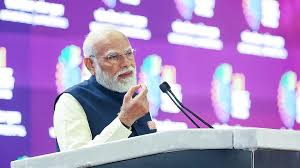
PM Modi's MANAV Module: India's Vision for Human-Centric AI
In an era increasingly defined by technological advancements, Artificial Intelligence (AI) stands as a pivotal force reshaping economies, societies, and daily lives. India, under the visionary leadership of Prime Minister Narendra Modi, has embarked on an ambitious journey to not just adopt AI but to lead in its development and deployment with a distinct philosophy: human-centricity. At the heart of this philosophy lies the 'MANAV Module' – an initiative designed to ensure that AI serves humanity, enhances lives, and fosters inclusive growth, rather than becoming a tool for exclusion or ethical dilemmas.
The name 'MANAV' itself, meaning 'human' in Sanskrit, perfectly encapsulates the core tenet of this module. It signifies a departure from a purely profit-driven or technologically deterministic approach to AI, instead advocating for a framework where human well-being, ethical considerations, and societal benefit are paramount. This strategic focus positions India as a thoughtful and responsible global player in the AI landscape, committed to leveraging its potential for the greater good.
India's AI Ambition: A Vision for the Future
India's approach to Artificial Intelligence is multifaceted, aiming to establish the nation not merely as a consumer of global AI technologies but as a significant contributor and innovator. The 'AI for All' mantra underscores a commitment to widespread adoption and benefit, ensuring that the transformative power of AI reaches every segment of society. This includes not only urban centers but also the vast rural landscape of India, where AI can unlock unprecedented opportunities in agriculture, healthcare, and education.
The vision extends beyond mere technological prowess. It encompasses:
- Responsible AI: Developing and deploying AI systems that are fair, transparent, accountable, and respectful of privacy.
- Data Governance: Establishing robust frameworks for data collection, usage, and security, recognizing data as a critical national asset.
- Skill Development: Investing heavily in training and upskilling programs to create a future-ready workforce capable of harnessing AI.
- Innovation Ecosystem: Fostering a vibrant environment for startups, researchers, and established companies to innovate in AI, drawing on India's vast talent pool.
This comprehensive strategy is crucial for a country like India, with its enormous population and diverse challenges, where AI has the potential to act as a powerful catalyst for socio-economic development.
The MANAV Module: At the Core of India's AI Strategy
The MANAV Module isn't just a concept; it's a strategic framework guiding India's AI trajectory. Its primary objectives include:
1. Ethical Framework Development
At its core, MANAV seeks to build a robust ethical framework for AI. This involves developing guidelines and standards that ensure AI systems are free from bias, respect human rights, protect privacy, and operate with transparency. It's about instilling 'AI by design' with ethical considerations, moving beyond mere compliance to proactive responsibility. This module aims to prevent the misuse of AI and ensure its applications align with constitutional values and societal well-being.
2. Promoting Research and Innovation
MANAV actively encourages cutting-edge research in AI, particularly in areas that address India-specific challenges. This includes funding academic institutions, fostering collaborations between industry and academia, and creating national AI research hubs. The focus is on developing indigenous AI solutions that cater to the unique linguistic, cultural, and socio-economic diversity of India.
3. Talent Skilling and Capacity Building
Recognizing the critical need for a skilled workforce, the MANAV Module emphasizes extensive skilling and reskilling programs. This includes integrating AI education into curricula from school to university levels, offering vocational training, and supporting advanced degrees in AI. The goal is to build a large pool of AI professionals, researchers, and entrepreneurs who can drive India's AI vision forward.
4. Data-Driven Governance
Leveraging AI for improved governance is another key aspect. MANAV promotes the use of AI in public services, aiming for enhanced efficiency, transparency, and citizen-centric delivery. This involves creating secure and accessible data platforms that can power AI applications in areas like healthcare, education, agriculture, and urban planning, always with stringent data privacy protocols.
Transformative Impact Across Sectors
The influence of MANAV-guided AI is expected to be profound across various sectors:
Healthcare Transformation
AI can revolutionize healthcare in India by enabling early disease detection, personalized treatment plans, and improved accessibility to medical expertise in remote areas. From AI-powered diagnostics for diseases like cancer and tuberculosis to intelligent systems for drug discovery and patient management, the potential is immense. It can also help optimize resource allocation and predict outbreaks, bolstering public health initiatives.
Revolutionizing Education
In education, AI offers personalized learning experiences, intelligent tutoring systems, and efficient administrative tools. MANAV encourages AI applications that can bridge educational disparities, make learning more engaging, and equip students with future-ready skills, especially in remote regions where access to quality education remains a challenge.
Boosting Agriculture
For a predominantly agricultural economy, AI holds the key to boosting productivity and sustainability. Precision agriculture, powered by AI, can optimize irrigation, monitor crop health, predict yields, and provide farmers with timely market insights. This can lead to increased incomes for farmers and enhanced food security for the nation.
Enhanced Governance and Public Services
AI can significantly enhance the efficiency and transparency of government services. From smart city initiatives and traffic management to public grievance redressal and disaster management, AI-powered solutions can make governance more responsive and effective, directly benefiting citizens.
Economy and Employment
While AI promises unprecedented economic growth, concerns about job displacement are valid globally. However, India's MANAV Module focuses on creating new employment opportunities and upskilling the workforce to adapt to the changing job market. AI is expected to create new industries and roles that demand advanced analytical and creative skills. The module aims to mitigate the risk of AI-driven job shock by proactively preparing millions entering the workforce, ensuring they are equipped to thrive in an AI-powered future through robust training and reskilling initiatives.
Ethical AI and Data Governance
The emphasis on ethical AI and robust data governance within the MANAV Module is not merely theoretical; it is a practical necessity for a diverse democracy like India. With a billion-plus population, the implications of biased AI algorithms or lax data privacy could be catastrophic. Therefore, MANAV prioritizes:
- Bias Mitigation: Developing techniques and frameworks to identify and eliminate biases in AI models, especially those trained on skewed datasets. This is crucial for ensuring fairness in critical applications like credit scoring, recruitment, and law enforcement.
- Transparency and Explainability: Ensuring that AI decisions are understandable and explainable to users and regulators. This builds trust and allows for accountability, moving away from 'black box' AI systems.
- Data Privacy and Security: Implementing stringent data protection laws and technological safeguards to secure personal data. This includes anonymization techniques and consent-based data sharing models, aligning with global best practices while respecting individual rights.
- Accountability Frameworks: Establishing clear lines of accountability for AI systems, particularly when they make autonomous decisions, to address potential errors or harms effectively.
These ethical considerations are woven into the fabric of MANAV, ensuring that India's journey with AI is not just about technological advancement but also about upholding human dignity and societal trust.
Challenges and the Path Forward
Despite the ambitious vision, the path to fully realizing the MANAV Module's potential is fraught with challenges. These include:
- Infrastructure Gaps: Ensuring pervasive access to high-speed internet and robust computing infrastructure, especially in remote areas, remains a significant hurdle.
- Talent Shortage: While India has a large talent pool, specialized AI expertise, particularly in cutting-edge research and ethical AI development, is still in demand.
- Data Quality and Availability: Access to clean, diverse, and well-curated datasets is crucial for training effective AI models, and this can be a challenge across various sectors.
- Funding and Investment: Significant public and private investment is required to fuel research, infrastructure development, and skill-building initiatives.
- Regulatory Agility: Crafting regulations that can keep pace with rapidly evolving AI technologies without stifling innovation is a delicate balancing act.
To overcome these challenges, India is adopting a collaborative approach, engaging with international partners, fostering public-private partnerships, and encouraging grassroots innovation. The nation is actively participating in global dialogues to shape the future of AI governance, exemplified by events like the India AI Impact Summit 2026, where world leaders converge to align on ethical and responsible AI development.
The Global Perspective
India's MANAV Module is not an isolated national strategy; it is a significant contribution to the global conversation on AI. By prioritizing human-centricity and ethical considerations, India offers a unique perspective that can influence international norms and standards for AI development. As AI becomes increasingly pervasive, the emphasis on values-driven AI becomes ever more critical. India's approach demonstrates that technological leadership can go hand-in-hand with a deep commitment to societal welfare and ethical principles.
The nation's willingness to invest in public good AI, address local challenges with indigenous solutions, and champion inclusive growth positions it as a responsible leader in the emerging global AI order. The lessons learned and the frameworks developed through MANAV could serve as a model for other developing nations seeking to harness AI responsibly.
Conclusion
Prime Minister Modi's MANAV Module represents a profound commitment to leveraging Artificial Intelligence for the betterment of humanity. It's an ambitious vision that seeks to integrate technological prowess with ethical responsibility, ensuring that India's journey into the AI future is inclusive, equitable, and sustainable. By focusing on ethical AI, robust research, widespread skilling, and citizen-centric governance, MANAV aims to position India not just as an AI powerhouse but as a beacon for human-centric technological development globally.
As India continues to innovate and implement the MANAV Module, its impact will reverberate across various sectors, improving lives, fostering economic growth, and shaping a future where AI truly serves all of humanity. The module stands as a testament to the belief that technology, when guided by strong ethical principles and a vision for inclusive growth, can be the most powerful tool for progress.
Suggested Articles
 General
The Rising Cost of AI-Generated Code: A Reality Check
Initial hype around AI coding assistance is facing a harsh economic reality. Discover why the costs of using AI to ch...
Read Article arrow_forward General
AI in European Hiring: Friend or Foe for Today's Workforce?
Explore the complex role of Artificial Intelligence in European recruitment, balancing its potential for efficiency w...
Read Article arrow_forward General
Big Tech's Global Aspirations Take Root in Asia's Digital Soil
Asia emerges as the focal point for major tech companies, driven by its vast markets, burgeoning digital economies, a...
Read Article arrow_forward General
Prince Charles to Tech Titans: Solving British Startup Hurdles
Discover how Prince Charles engaged with Jeff Bezos, Tim Cook, and Jensen Huang to identify and address critical chal...
Read Article arrow_forward