

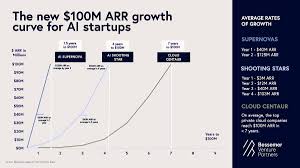
The New Velocity: Startups Hitting $10M ARR in Just Three Months
In the dynamic landscape of global business, a new phenomenon is reshaping expectations for startup success: an increasing number of companies are achieving an astonishing $10 million in Annual Recurring Revenue (ARR) in as little as three months. This rapid ascent to a significant financial milestone, once considered a multi-year endeavor, signifies a profound shift in market dynamics, technological leverage, and entrepreneurial agility. It's a testament to an ecosystem ripe with opportunity, where innovation, efficient capital, and strategic execution converge to create unprecedented growth trajectories.
The traditional growth curve for startups, often measured in years to reach substantial revenue figures, is being compressed into mere months. This isn't just about a few outliers; it represents a growing trend that challenges conventional wisdom and redefines what's possible for nascent ventures. From software-as-a-service (SaaS) platforms to AI-powered solutions and digital marketplaces, companies are finding pathways to hyper-growth that were unimaginable a decade ago. But what exactly is fueling this extraordinary acceleration, and what does it mean for the future of entrepreneurship?
Understanding the $10M ARR Milestone
Annual Recurring Revenue (ARR) is a crucial metric for subscription-based businesses, representing the value of recurring revenue components of a company's subscriptions normalized to a one-year period. Reaching $10M ARR is a significant achievement; it signals strong product-market fit, scalable sales channels, and a robust business model. Historically, this milestone often took years, requiring multiple funding rounds, extensive team building, and a prolonged market penetration strategy. The fact that some startups are now achieving this in a quarter or less speaks volumes about the current environment.
This rapid attainment isn't solely a result of inflated valuations or unsustainable growth hacks. Instead, it often reflects deeply effective strategies built upon leveraging cutting-edge technology, understanding global market needs, and deploying capital with surgical precision. These startups are not just growing fast; they are often building sustainable, high-value businesses with strong fundamentals, attracting significant investor interest and setting new benchmarks for success.
Key Drivers Behind Rapid ARR Growth
1. The AI Revolution and Cloud Infrastructure
Perhaps the most significant catalyst for this hyper-growth is the pervasive influence of Artificial Intelligence (AI) and the mature, scalable cloud infrastructure. AI-driven products and services offer unparalleled efficiencies, personalization, and automation, solving complex problems at scale. Startups can now build sophisticated solutions with smaller teams and less upfront investment, leveraging readily available AI models and cloud computing resources. The ability to integrate AI into core offerings allows for rapid iteration and deployment, accelerating product-market fit. Indeed, many Indian IT giants partner with OpenAI and Anthropic to drive AI-led growth, showcasing the widespread adoption and investment in AI's potential to redefine industries.
2. Global Market Access from Day One
The internet has truly globalized markets. Startups are no longer constrained by geographical boundaries; they can launch products and acquire customers worldwide from the outset. Digital marketing channels, localized payment solutions, and global logistics networks enable immediate access to a vast customer base, reducing the time and cost associated with international expansion. This broad reach dramatically increases the potential market size, making rapid revenue accumulation more feasible.
3. Efficient Capital Deployment and Venture Backing
While venture capital is abundant, it's also smarter. Investors are increasingly sophisticated, identifying high-potential ventures early and providing not just capital but also strategic guidance and network access. This enables startups to deploy funds more efficiently, focusing on critical growth areas like product development and customer acquisition. The availability of pre-seed and seed funding allows for quicker experimentation and scaling, accelerating the path to significant revenue milestones.
4. The Subscription Economy and Predictable Revenue
The dominance of the subscription model across various industries provides a predictable and compounding revenue stream. Once a customer is acquired, their recurring payments contribute directly to ARR, creating a powerful compounding effect as the customer base grows. This model reduces revenue volatility and allows for more accurate forecasting, which is attractive to investors and enables aggressive reinvestment in growth.
5. Hyper-Niche Market Specialization
Instead of broadly targeting large markets, many fast-growing startups excel by identifying and dominating hyper-niche segments. By offering highly specialized solutions that perfectly address the pain points of a specific customer group, they can achieve rapid adoption and high customer loyalty, often without extensive marketing spend. Once established, they can then expand into adjacent niches, creating a scalable growth ladder.
6. Agile Methodologies and Lean Operations
Modern startups are built on principles of agility and lean operations. They prioritize rapid prototyping, continuous feedback loops, and iterative development. This allows them to quickly achieve product-market fit, adapt to customer needs, and pivot when necessary, minimizing wasted resources and maximizing responsiveness to market demands. Remote and distributed teams also contribute to lean operations, enabling access to global talent pools and reducing overheads.
The AI Factor: A Catalyst for Exponential Growth
The role of Artificial Intelligence cannot be overstated in this new era of hyper-growth. AI is not just a feature; it's often the core engine driving these rapid successes. For example:
- Automated Sales and Marketing: AI-powered tools personalize customer outreach, optimize ad spend, and automate lead qualification, dramatically reducing customer acquisition costs and accelerating sales cycles.
- Product Innovation: AI enables the creation of truly novel products, from intelligent assistants to predictive analytics platforms, offering capabilities that were previously impossible.
- Operational Efficiency: AI automates internal processes, from customer support to data analysis, allowing lean teams to manage large customer bases and scale operations without proportional increases in headcount. This frees up human capital to focus on strategic initiatives rather than repetitive tasks.
- Enhanced Customer Experience: AI-driven recommendations, chatbots, and personalized interfaces improve user engagement and retention, critical factors for sustained ARR growth.
However, this intense focus on AI also comes with its own set of challenges. As the AI boom is so huge, it's causing shortages everywhere else, from computing power to skilled talent, startups must navigate a competitive landscape for resources to sustain their growth.
Challenges and Pitfalls of Hyper-Growth
While achieving $10M ARR in three months is exhilarating, it's not without its challenges. Such rapid growth can expose vulnerabilities if not managed carefully:
- Scalability Issues: Infrastructure, team, and processes must scale rapidly to keep pace. Technical debt, unmanaged customer support, and burnout can quickly derail success.
- Talent Acquisition and Retention: Finding and keeping top talent, especially in specialized AI and tech roles, becomes a relentless race. Rapid growth can also strain company culture.
- Financial Discipline: While revenue grows, managing cash flow and ensuring profitability remain critical. Aggressive spending on growth without a clear path to sustainable economics can be dangerous.
- Market Saturation and Competition: Hyper-growth can attract fierce competition, requiring continuous innovation and differentiation to maintain market share.
- Regulatory and Compliance Hurdles: Operating globally and handling vast amounts of data can quickly introduce complex legal and ethical considerations that must be addressed proactively.
Strategies for Aspiring Founders in the New Era
For entrepreneurs aiming to emulate this rapid success, several strategies are becoming increasingly vital:
- Problem-First Approach: Identify genuine, acute pain points in a market that can be solved with innovative technology, preferably AI. The more critical the problem, the faster adoption will be.
- Leverage AI and Automation from Day One: Integrate AI into your product and operations to create leverage. This means not just using AI, but building your core solution around its capabilities to deliver superior value and efficiency.
- Build for Global Scale: Design your product, marketing, and operations with a global audience in mind from the very beginning. Think about localization, international payment gateways, and scalable cloud infrastructure.
- Focus Relentlessly on Customer Value: In a crowded market, delivering exceptional value and a seamless customer experience is paramount. High retention and low churn are key to accelerating ARR.
- Assemble an A-Team: Surround yourself with experienced, adaptable, and passionate individuals who can thrive in a fast-paced environment. Strong leadership and a clear vision are essential.
- Master Your Metrics: Understand your key performance indicators (KPIs) inside and out, especially customer acquisition cost (CAC), customer lifetime value (CLTV), and churn rate. Data-driven decisions are crucial for navigating hyper-growth.
The Future of Startup Acceleration
The trend of startups reaching significant ARR milestones in record time is likely to continue, driven by ongoing advancements in AI, further globalization, and increasingly sophisticated entrepreneurial ecosystems. This phenomenon is not merely about speed; it's about efficiency, impact, and the democratization of high-value solutions. It signals a future where innovation can translate into market dominance with unprecedented swiftness, challenging incumbents and creating new economic opportunities at a rapid pace.
For those interested in delving deeper into the current state of technology and business, you can explore more insights on startup trends and the evolving digital landscape on our blog.
Conclusion
The emergence of startups hitting $10M ARR in just three months marks a pivotal moment in business history. It reflects a powerful confluence of technological advancement, global connectivity, and strategic execution. While the journey is fraught with challenges, the potential rewards are immense. This new benchmark for rapid success is inspiring a generation of founders to think bigger, act faster, and leverage the full power of modern technology to build businesses that not only grow but thrive at an accelerated rate, fundamentally reshaping industries and economies worldwide.
Suggested Articles
 General
Nanya Technology Shares Soar 10% After USD 2.5 Billion Fundraise
Nanya Technology's stock surged 10% following a successful USD 2.5 billion fundraising, signaling strong investor con...
Read Article arrow_forward Tech
Tech
American Eagle’s New Creator Rewards Program: A Winning Model for Influencer Marketing
American Eagle introduces a creator rewards program to encourage consistent content creation, empower micro-influence...
Read Article arrow_forward General
AI's Cinematic Revolution: Rewiring the World's Film Industry
Discover how Artificial Intelligence is transforming every facet of the world's most prolific film industry, from scr...
Read Article arrow_forward General
How a Telehealth Startup Thrived on USD 20K & AI
Discover how a lean telehealth startup leveraged just USD 20,000 and advanced AI to disrupt the healthcare industry, ...
Read Article arrow_forward