

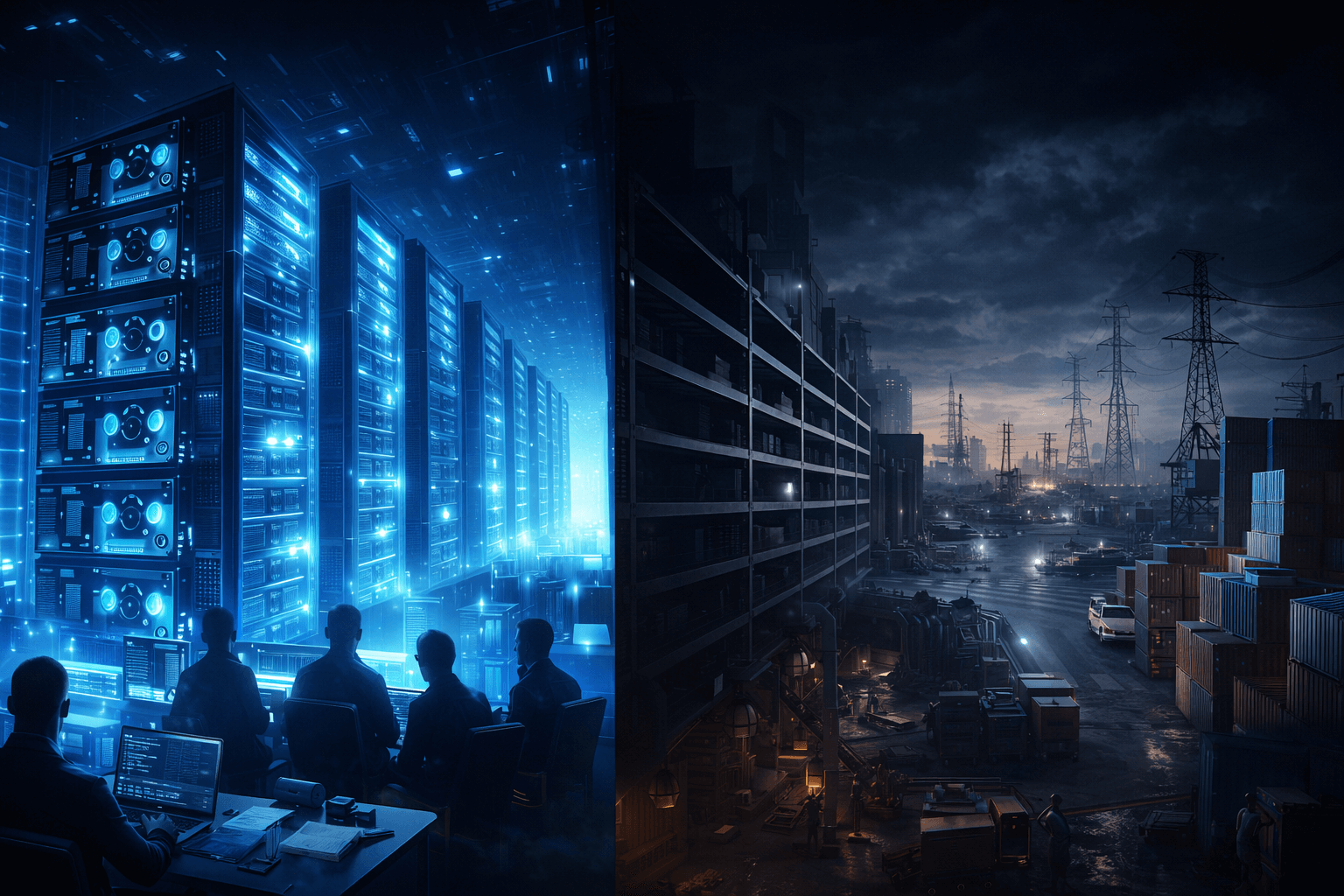
Elon Musk Confirms Tesla's Mega AI Chip Fab Project Set for Launch
In a declaration that sent ripples through the tech and automotive industries, Elon Musk recently announced that Tesla's monumental Artificial Intelligence (AI) chip fabrication project is slated to commence operations in just seven days. This bold move underscores Tesla's relentless pursuit of AI supremacy, particularly in the realm of autonomous driving and robotics. The establishment of a dedicated mega AI chip fab signals a significant escalation in Tesla's vertical integration strategy, aiming to solidify its control over the entire development stack – from software algorithms to the very silicon that powers them.
Musk's vision for Tesla extends far beyond electric vehicles; it encompasses a future where AI-driven robots and fully autonomous vehicles revolutionize daily life. The core enabler for this ambitious future is cutting-edge AI hardware, capable of processing vast amounts of data at unparalleled speeds. This new fabrication facility is not merely an expansion; it represents a strategic pivot to overcome potential bottlenecks in the global semiconductor supply chain and to tailor hardware precisely to Tesla's unique AI workloads.
The Strategic Imperative: Why Tesla Needs Its Own Mega Fab
For years, Tesla has been at the forefront of developing sophisticated AI models for its Full Self-Driving (FSD) technology. This endeavor requires immense computational power, both for training the neural networks and for real-time inference in vehicles. Historically, companies like Nvidia have been dominant in providing the high-performance GPUs necessary for such tasks. While Tesla has previously relied on external suppliers, its internal development of the Dojo supercomputer and its custom AI training chips, D1, highlighted a growing desire for self-sufficiency.
The decision to build a mega AI chip fab is a natural progression of this strategy. By bringing chip manufacturing in-house, Tesla aims to:
- Optimize Performance: Design chips specifically for its AI algorithms, achieving greater efficiency and performance than off-the-shelf solutions.
- Ensure Supply Security: Mitigate risks associated with global supply chain disruptions, which have plagued various industries in recent years.
- Reduce Costs: Potentially lower per-unit costs in the long run by eliminating reliance on third-party manufacturers and controlling the production process.
- Accelerate Innovation: Shorten development cycles by closely integrating chip design with software development, fostering rapid iteration and improvement.
This level of vertical integration is a hallmark of companies striving for technological leadership. It reflects a profound understanding that in the race for AI dominance, hardware and software must evolve hand-in-hand, creating a tightly coupled ecosystem that maximizes performance and efficiency.
Project Dojo and the Quest for AI Supremacy
At the heart of Tesla's AI strategy is Project Dojo, a custom-built supercomputer designed from the ground up to train AI models for autonomous driving. Dojo's architecture, featuring Tesla's D1 chip, is specifically optimized for neural network training workloads. Musk has repeatedly emphasized the sheer scale and complexity of training truly generalized AI for self-driving, requiring an unprecedented amount of compute. The new mega AI chip fab will undoubtedly play a critical role in scaling up the production of these D1 chips and subsequent generations, allowing Dojo to expand its capabilities exponentially.
Musk has previously stated that Tesla intends to spend over USD 1 billion on Dojo in 2024 alone, a testament to the company's commitment to AI. The fab project, while an additional investment, aligns perfectly with this long-term vision. It signifies a transition from reliance on external foundries for advanced silicon to potentially having a significant portion of its critical AI hardware produced under its direct control. This strategic move could put Tesla in an even stronger position against competitors in the automotive and tech sectors vying for AI superiority.
The Broader Impact on the AI Industry and Supply Chains
Tesla's entry into chip fabrication on such a grand scale is set to have far-reaching implications for the entire AI industry. It underscores the intense competition among tech giants to secure and advance their AI capabilities. As companies like Tesla invest heavily in custom AI hardware, it could spur further innovation across the semiconductor landscape.
This initiative also highlights a critical trend: the AI boom is so huge it's causing shortages everywhere, from specialized GPUs to advanced memory. By taking control of its own chip production, Tesla is not just addressing its immediate needs but is also proactively mitigating future supply constraints that could hinder its progress. This could inspire other major players to explore similar strategies, potentially leading to a more diversified and robust global semiconductor ecosystem.
Furthermore, this development will undoubtedly influence the landscape of AI stocks. While companies like Nvidia will continue to be dominant players, the rise of powerful in-house capabilities from large customers like Tesla could shift market dynamics. Investors will be closely watching how this impacts the long-term growth trajectories of both established chipmakers and the new entrants into the fabrication space.
The Economics of AI Hardware: Investing Billions for Future Returns
Building and operating a state-of-the-art semiconductor fabrication plant is an incredibly capital-intensive undertaking, typically costing billions of US Dollars. The initial investment includes land acquisition, construction of cleanrooms, and the procurement of highly specialized and expensive machinery. Moreover, the operational costs for power, specialized gases, and a highly skilled workforce are substantial. Tesla's willingness to commit such resources underscores the profound economic value it anticipates from its advanced AI capabilities.
The return on this investment will not be immediate but is expected to materialize through superior autonomous driving performance, leading to increased adoption of FSD, potential licensing opportunities, and the deployment of AI in new product categories like robotics. A fully autonomous vehicle fleet, for instance, has the potential to generate immense revenue through robotaxi services, fundamentally altering the economics of transportation. The ability to control the core hardware foundation provides a strategic advantage that few companies can match.
Challenges and the Road Ahead
While the launch of a mega AI chip fab is a monumental achievement, the path forward is not without its challenges. The semiconductor industry is notoriously complex, requiring continuous innovation, stringent quality control, and the ability to navigate a rapidly evolving technological landscape. Tesla will face competition not only from established chipmakers but also from other tech giants making similar investments in custom AI silicon.
Additionally, the sheer pace of AI development means that chip architectures must constantly evolve. Tesla's fab will need to be flexible and adaptable, capable of producing new generations of chips efficiently. Recruiting and retaining top talent in chip design and fabrication will also be crucial for its long-term success. However, given Tesla's track record of attracting top engineering talent and its audacious goals, it is well-positioned to tackle these hurdles.
Tesla's Role in Shaping the Future of AI
Tesla's impending mega AI chip fab project is more than just a new manufacturing facility; it's a declaration of intent. It signifies the company's commitment to controlling its destiny in the AI era and pushing the boundaries of what's possible with artificial intelligence. By vertically integrating its AI hardware development, Tesla is not just building better cars; it is building the foundational technology for a future powered by advanced AI.
As the world watches the launch of this project, it's clear that the lines between automotive, software, and semiconductor industries are increasingly blurring. Tesla, under Elon Musk's leadership, continues to be a pivotal force in driving this convergence, promising a future where truly intelligent machines play an ever-larger role in our lives. This initiative could well be remembered as a critical step in the ongoing quest for artificial general intelligence and the widespread deployment of autonomous systems.
Suggested Articles
 General
Operationalizing Agentic AI: A Stakeholder's Guide
Discover how businesses can successfully integrate agentic AI into their operations, focusing on the roles and respon...
Read Article arrow_forward General
Tech's Role in Scaling Regional Indian Cuisine Consistently
Discover how modern technology is revolutionizing Indian restaurants, enabling them to expand authentic regional flav...
Read Article arrow_forward General
YC Demo Day: From Lunar Ventures to Livestock Tech
Explore 8 groundbreaking startups from YC Demo Day, attracting investors with innovations ranging from space tourism ...
Read Article arrow_forward General
AI in Law: Power, Perils, and the Imperative of Monitoring
Explore AI's transformative impact on legal work, from research to analytics. Understand the benefits, risks like bia...
Read Article arrow_forward