

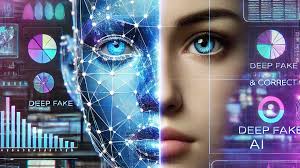
The Rise of AI-Generated Content and the Urgent Need for Detection
Artificial intelligence has advanced at an astounding pace, giving rise to sophisticated content generation models capable of producing text, images, audio, and video that are often indistinguishable from human-created work. From compelling narratives crafted by large language models (LLMs) to hyper-realistic deepfake videos and images, AI's creative prowess presents a double-edged sword. While it unlocks unprecedented avenues for creativity and efficiency, it also fuels a growing concern about misinformation, disinformation, and the erosion of trust in digital media.
This surge in AI-generated content has created an urgent demand for tools that can accurately identify what's real and what's not. Governments, educational institutions, businesses, and individuals alike are seeking reliable methods to vet information, maintain academic integrity, protect brand reputations, and safeguard against fraud. The question on everyone's mind is: Do these AI detection tools, which promise to unmask AI fakes, actually work?
Understanding the Landscape of AI Detection Tools
The market for AI detection tools is rapidly expanding, offering a diverse array of solutions targeting different types of AI-generated content. These tools primarily operate on various principles:
- Statistical Analysis and Pattern Recognition: Many text-based AI detectors analyze linguistic patterns, sentence structures, vocabulary choices, and perplexity (the measure of how well a probability model predicts a sample) to identify AI fingerprints. AI models often exhibit a certain 'smoothness' or statistical regularity that differs from human writing.
- Metadata and Digital Watermarking: Some advanced generative AI models are being developed with embedded, invisible watermarks. These digital signatures could theoretically allow for foolproof detection by revealing the content's AI origin. Similarly, analyzing metadata associated with files can sometimes provide clues, though this is easily manipulated.
- Feature Extraction for Images and Video: For visual content, detectors look for anomalies that are subtle yet characteristic of AI generation, such as inconsistencies in lighting, distorted reflections, unusual pixel patterns, or slight imperfections in human features (e.g., fingers, teeth, earlobes).
- Behavioral Analysis for Audio: AI-generated voices, while sounding realistic, might lack the natural pauses, intonations, and emotional nuances inherent in human speech. Detection tools attempt to pinpoint these deviations.
Many of these tools leverage their own machine learning models, trained on vast datasets of both human and AI-generated content, to learn the subtle differences that distinguish them. However, this approach also forms the basis of their fundamental challenge.
The Cat-and-Mouse Game: Challenges and Limitations
The effectiveness of AI detection tools is a constantly moving target, caught in an perpetual 'arms race' with generative AI models. As AI generation techniques become more sophisticated, detection methods struggle to keep pace. This leads to several significant challenges:
The Ever-Evolving Generative AI
Generative AI models are continuously updated, refined, and trained on new data, making their outputs increasingly difficult to distinguish. What an AI detector identifies as an 'AI fingerprint' today might be eliminated or cleverly disguised in tomorrow's generation. This rapid evolution means detection tools require constant updates and retraining, often lagging behind the latest generative capabilities.
False Positives and False Negatives
One of the most critical issues is the prevalence of false positives (labeling human content as AI-generated) and false negatives (failing to detect AI-generated content). For instance, a student's perfectly crafted essay might be flagged as AI, or conversely, a sophisticated deepfake might slip past a detector. These errors can have severe consequences, from wrongly accusing individuals to allowing harmful misinformation to spread unchecked.
Human-Like AI Output
The goal of generative AI is to produce output that is as human-like as possible. When an AI model achieves this, it inherently makes the job of an AI detector incredibly challenging. If the content truly mimics human creativity, style, and unpredictability, then statistical analysis alone may not be sufficient.
Ethical and Practical Implications
Relying solely on AI detectors raises ethical concerns. The potential for misidentification can lead to a 'chilling effect,' where individuals become hesitant to express themselves for fear of being wrongly accused of using AI. Furthermore, the practical application in high-stakes environments, such as legal proceedings or academic grading, requires near-perfect accuracy, which current tools struggle to deliver.
Case Studies and Real-World Effectiveness
Numerous studies and real-world tests have demonstrated the varying reliability of AI detection tools. For example, many popular AI text detectors have shown inconsistent performance when faced with content that has been slightly edited by a human after AI generation, or when used on highly creative or domain-specific texts. Similarly, deepfake detection for images and videos, while improving, still faces significant hurdles when confronted with high-quality fakes or when the source material itself is of lower resolution.
Efforts are being made by companies like Microsoft to develop more robust detection mechanisms. For instance, Microsoft is developing scanners to detect 'backdoor sleeper agents' in large language models, indicating a deeper, more sophisticated approach to identifying hidden malicious AI behaviors rather than just surface-level content detection.
Why Accurate Detection Matters More Than Ever
The stakes involved in accurately identifying AI-generated content are immense:
- Combating Misinformation: The spread of AI-generated fake news, propaganda, and manipulated media can severely impact public opinion, democratic processes, and social stability.
- Maintaining Trust: In an increasingly digital world, trust in the authenticity of online content is paramount for news organizations, educational institutions, and businesses.
- Academic Integrity: The use of AI tools for generating essays, research papers, or code in academic settings undermines the learning process and fair assessment.
- Security and Fraud Prevention: Deepfake technology can be exploited for identity theft, financial fraud, and sophisticated phishing attacks, making detection crucial for cybersecurity.
- Legal and Regulatory Compliance: As AI governance frameworks evolve, accurate detection becomes vital for enforcing compliance with new laws and regulations. For instance, India has notified IT Rules amendments to regulate AI-generated content, highlighting the global push for accountability.
The Future of AI Detection: A Multi-faceted Approach
Given the inherent challenges, the future of AI detection is unlikely to rely on a single, infallible tool. Instead, a multi-faceted approach involving technology, policy, and human discernment will be necessary:
- Integrated Detection and Watermarking: Future generative AI models may be legally or ethically mandated to incorporate invisible watermarks or cryptographic signatures, making their outputs inherently detectable.
- Provenance Tracking: Blockchain-like technologies could be used to create a verifiable chain of custody for digital content, indicating its origin and any subsequent modifications.
- Regulatory Frameworks: Governments worldwide are grappling with how to regulate AI. Laws requiring disclosure of AI-generated content or penalizing its malicious use will play a crucial role.
- Human-AI Collaboration: Instead of fully automated detection, a hybrid approach where AI tools assist human experts by flagging suspicious content for further review might prove more effective.
- Digital Literacy and Critical Thinking: Ultimately, educating the public about the existence and capabilities of generative AI, and fostering critical thinking skills to evaluate digital content, remains a vital defense.
Recommendations for Users and Organizations
In this evolving landscape, what can individuals and organizations do?
- Exercise Skepticism: Approach all unfamiliar online content, especially sensational or emotionally charged material, with a healthy dose of skepticism.
- Cross-Verify Information: Consult multiple reputable sources to corroborate information.
- Look for Inconsistencies: Pay attention to subtle anomalies in images (e.g., distorted hands, illogical shadows), video (e.g., unnatural blinking, lip-sync issues), and text (e.g., overly formal language, repetitive phrases, lack of personal touch).
- Use Tools as a Guide, Not an Oracle: Employ AI detection tools as one data point in a broader verification process, understanding their limitations and potential for error.
- Stay Informed: Keep abreast of the latest advancements in both generative AI and detection technologies.
Conclusion: A Continuous Battle for Authenticity
The question of whether AI detection tools truly work is complex. While they offer valuable capabilities and are continuously improving, they are not, and may never be, foolproof. The dynamic nature of AI development ensures that detection will remain a challenging, ongoing battle. As generative AI becomes increasingly sophisticated, the emphasis must shift from solely technological detection to a comprehensive strategy that combines advanced technical solutions, robust regulatory frameworks, and an educated, critically thinking populace. The quest for digital authenticity in the age of AI is a shared responsibility, demanding vigilance and adaptability from all stakeholders.
Suggested Articles
 General
Anthropic's Mythos AI: Unpacking the Global Alarm
Anthropic's new A.I. model, Mythos, has sparked global concern. This article delves into its capabilities, the ethica...
Read Article arrow_forward General
India Recognises 55,200 Startups in 2025-26: A Landmark Achievement
India's entrepreneurial landscape flourishes as 55,200 entities gain startup recognition in 2025-26, signaling robust...
Read Article arrow_forward Business
Valentine’s Day 2026 Data Shows “Love” Hurts Campaign Performance
Valentine’s Day 2026 data shows campaigns using the word “love” underperform, while humor, personalization, and fresh...
Read Article arrow_forward General
OpenAI Acquires TBPN: A New Frontier in Tech Media & AI Content
OpenAI's surprising acquisition of TBPN, a leading technology talk show, signals a significant strategic shift into m...
Read Article arrow_forward