

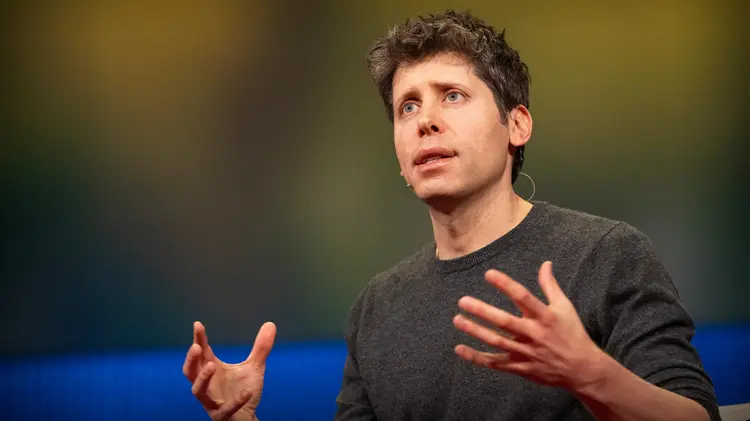
The High-Stakes Legal Showdown Over OpenAI's Future
The world of artificial intelligence is bracing for a dramatic legal confrontation as the bitter feud between two of its most prominent figures, Elon Musk and Sam Altman, heads to court. At the heart of the dispute lies OpenAI, the revolutionary AI research organization that has captivated the globe with its advancements, particularly with products like ChatGPT. Musk, a co-founder of OpenAI, has filed a lawsuit against the company and its CEO, Sam Altman, alleging that they have betrayed the organization's founding mission to develop Artificial General Intelligence (AGI) for the benefit of humanity, rather than for profit.
This legal battle is more than just a clash of titans; it's a pivotal moment that could redefine the trajectory of AI development, intellectual property, and corporate governance in the burgeoning tech sector. The outcome may not only decide the fate of OpenAI but also set precedents for how AGI is developed, regulated, and commercialized in the future.
The Genesis of OpenAI: A Vision for Humanity
OpenAI was founded in 2015 by Elon Musk, Sam Altman, Greg Brockman, Ilya Sutskever, and others, with an ambitious and noble goal: to ensure that AGI benefits all of humanity. It was established as a non-profit entity, explicitly designed to counter the risks of powerful AI being controlled by a few, profit-driven corporations. Musk was a significant early investor, reportedly contributing USD 100 million and playing a crucial role in its initial strategy and talent acquisition.
The founding charter explicitly stated, "Our goal is to advance digital intelligence in the way that is most likely to benefit humanity as a whole, unconstrained by a need to generate financial return." This foundational principle of open-source research and universal benefit is central to Musk's current lawsuit, where he argues that OpenAI has dramatically deviated from this path.
The Shift to For-Profit and Musk's Departure
The first significant cracks in OpenAI's original vision began to appear as the immense computational and talent costs of developing cutting-edge AI became apparent. In 2019, OpenAI announced a controversial restructuring, creating a "capped-profit" subsidiary to attract investment while maintaining the non-profit parent's oversight. This move allowed OpenAI to raise significant capital, notably from Microsoft, which has since invested billions of US dollars into the company.
Elon Musk, who had already stepped down from OpenAI's board in 2018 due to perceived conflicts of interest with his other ventures, particularly Tesla's AI initiatives, vocally opposed this shift. He argued that the pivot to a for-profit model, especially with a close partnership with a corporate giant like Microsoft, fundamentally compromised the original mission. He believed it transformed OpenAI from a beacon of open, humanity-first AI into a profit-seeking entity, driven by commercial interests rather than altruism.
Musk's Core Allegations: A Breach of Contract
Musk's lawsuit is multifaceted, but its primary argument hinges on a breach of contract. He alleges that OpenAI, under Sam Altman's leadership, has abandoned its foundational agreement to develop AGI for the benefit of humanity as a non-profit. Instead, he claims it has become a closed-source, de facto subsidiary of Microsoft, prioritizing shareholder value and commercial deployment over universal access and safety.
- Breach of Fiduciary Duty: Musk asserts that Altman and other key leaders have breached their fiduciary duties by steering the company away from its non-profit roots.
- Proprietary AGI Development: He claims that OpenAI's most advanced AI, including GPT-4, is being developed as a proprietary technology, rather than being openly shared as originally intended. This goes against the core "open" aspect of OpenAI.
- Commercialization Over Safety: Musk's suit suggests that the intense pressure to commercialize and generate revenue from its AI models means that safety protocols and ethical considerations are being downplayed.
- Misuse of Resources: He also implies that the resources and intellectual property contributed by early investors like himself were intended for a different, non-profit purpose.
The lawsuit seeks to compel OpenAI to return to its original non-profit mission, make its AI research and technology open to the public, and prevent it from further developing AGI for commercial gain. It's a bold move that challenges the very legal and ethical frameworks surrounding AI development.
OpenAI's Counter-Arguments and Defense
OpenAI, along with Sam Altman, has vehemently denied Musk's allegations. They contend that the shift to a capped-profit model was a necessary evolution to secure the massive funding required to compete with other tech giants in the race for AGI. Developing AGI requires immense computational power, vast datasets, and top-tier talent, all of which come with astronomical costs, easily reaching hundreds of millions or even billions of US dollars.
Their defense typically includes:
- Pragmatic Evolution: The transition was a practical necessity to achieve the original mission. Without significant funding, OpenAI would have been outpaced by well-funded corporate labs, making its goal of benefiting humanity impossible.
- Capped-Profit Structure: They emphasize that the "capped-profit" structure ensures that the primary mission remains paramount, with profits capped and primarily reinvested into the non-profit parent.
- Continued Commitment to Safety: OpenAI maintains that safety and ethical development remain core to its operations, even with commercial pursuits. Their research into AI safety and alignment continues to be a significant focus.
- Musk's Own Commercial Interests: OpenAI has subtly implied that Musk's lawsuit might be influenced by his own competitive interests, given his parallel AI ventures at Tesla and xAI, which directly compete with OpenAI.
The company also released past emails from Musk, attempting to show that he was aware of and even advocated for a for-profit structure at certain points, or that he acknowledged the financial challenges. This back-and-forth illustrates the deeply personal and ideological nature of this conflict.
Implications for the AI Industry and Beyond
This lawsuit carries monumental implications for the entire AI industry. The legal definitions of "non-profit mission," "fiduciary duty" in a hybrid corporate structure, and the ownership of intellectual property developed under evolving corporate models will all be tested. The case could:
- Influence AI Governance: Force a re-evaluation of how AI research organizations are structured and governed, especially those with dual non-profit/for-profit models.
- Impact Investor Relations: Create uncertainty for investors in AI startups, particularly those with a strong ethical or societal mission that might clash with commercial pressures. The AI stocks reset witnessed recently reflects the volatility and rapid changes in this sector.
- Shape Future AI Regulation: Bring greater scrutiny to the rapid commercialization of powerful AI models and potentially spur new regulatory frameworks to ensure ethical development and deployment. Countries like India are already working on guidelines, with India notifying IT rules amendments to regulate AI-generated content.
- Redefine "Open" AI: Spark a debate on what "open" truly means in the context of advanced AI, especially when core models like GPT-4 are not fully open-sourced.
The lawsuit also highlights the growing tension between the utopian vision of AI benefiting all humanity and the capitalist realities of building and deploying immensely complex and expensive technologies. The sheer scale of the AI boom causing shortages everywhere, from chips to talent, underscores the immense resources needed.
The Battle for the Soul of AGI
Beyond the legal jargon and financial specifics, Musk and Altman's feud represents a battle for the very soul of Artificial General Intelligence. Musk's argument is fundamentally an ethical one: that AGI, a technology with the potential to reshape civilization, must not be subjected to the whims of corporate profit or closed-source control. He sees a future where AGI becomes too powerful to be left in the hands of a few, especially if those hands are guided by commercial imperatives.
OpenAI, while now a commercial entity, still claims to be guided by its mission, albeit through a different operational model. Its success, epitomized by products like ChatGPT which quickly garnered 100 million weekly users from India alone, has shown the immense potential and demand for AI, but also amplified the scrutiny over its ethical underpinnings.
The court will have to grapple with complex questions: Was there a binding agreement? Did OpenAI truly abandon its mission? What constitutes "for the benefit of humanity" in the context of advanced AI development? And how do you weigh the necessity of funding against ethical commitments?
What Lies Ahead?
The legal proceedings will likely be protracted, involving extensive discovery, expert testimony, and intense public scrutiny. Regardless of the verdict, the case has already achieved one thing: it has forced a global conversation about the principles governing AI development. It highlights the profound philosophical, ethical, and commercial challenges that arise when transformative technology approaches capabilities once thought to be science fiction.
The feud between Elon Musk and Sam Altman is not merely a personal spat; it is a critical juncture for the future of AI. The outcome will resonate far beyond the courtroom, shaping how AGI is pursued, controlled, and ultimately, whether it truly serves all of humanity or just a privileged few.
Suggested Articles
 General
Allbirds' AI Pivot: Shares Soar 580% in Bold Transformation
Allbirds, once known for sustainable footwear, has made a dramatic pivot to Artificial Intelligence, sending its shar...
Read Article arrow_forward
General
Shock as RSPCA Uncovers 250 Dogs: 'It's Not AI, It's Real'
RSPCA investigators were met with a harrowing scene, rescuing over 250 dogs from horrific conditions at a single prop...
Read Article arrow_forward General
AI-Powered Cyber Heist: Mexico Suffers Massive Data Breach
Hackers leveraging artificial intelligence have reportedly stolen hundreds of millions of Mexican government and priv...
Read Article arrow_forward General
Ethiraj College Launches Startup Incubation Centre for Women
Ethiraj College for Women has opened a pioneering startup incubation centre, fostering entrepreneurship, innovation, ...
Read Article arrow_forward