

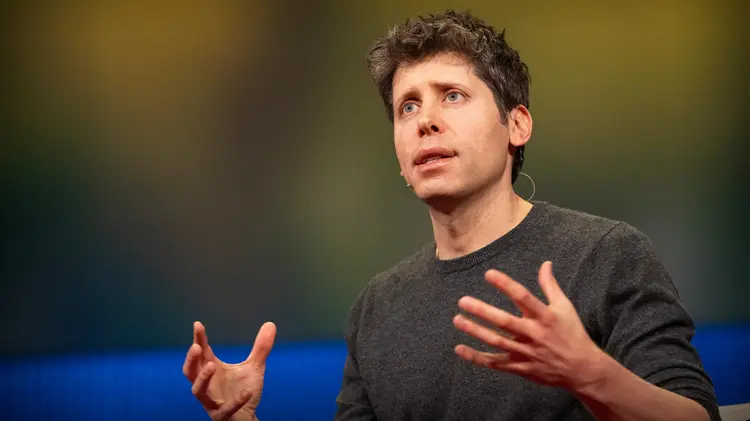
The High-Stakes Showdown: Elon Musk vs. Sam Altman and OpenAI
The tech world is currently captivated by a legal battle of epic proportions, as the highly anticipated trial pitting Elon Musk against Sam Altman and OpenAI has officially begun. At its core, this isn't just a dispute between two titans of innovation; it's a profound clash over the very soul and future direction of Artificial Intelligence. Musk, a co-founder of OpenAI, alleges that the company has betrayed its foundational non-profit, open-source mission by prioritizing profit and aligning too closely with Microsoft.
This trial is more than a personal vendetta; it represents a critical juncture for the burgeoning AI industry, raising fundamental questions about control, ethics, and the ultimate purpose of developing artificial general intelligence (AGI). The outcome could redefine how AI companies operate, influencing everything from investment strategies to regulatory frameworks globally. As the proceedings unfold, the world watches to see if OpenAI can defend its transformation or if Musk's allegations will force a re-evaluation of its trajectory.
Musk's Core Allegations: A Betrayal of Vision
Elon Musk's lawsuit is built on a narrative of betrayal, claiming that OpenAI, under Sam Altman's leadership, has strayed irrevocably from its original charter. When OpenAI was founded in 2015, it was conceived as a non-profit research institution dedicated to ensuring that AGI benefited all of humanity, not just a single corporation or individual. The explicit goal was to develop AI in the open, preventing it from becoming a proprietary tool controlled by a few.
Musk asserts that the company's subsequent pivot to a 'capped-profit' model and its deep financial and operational ties with Microsoft represent a catastrophic departure from these initial ideals. He argues that OpenAI has become a de facto subsidiary of Microsoft, driven by commercial imperatives rather than its altruistic mission. This shift, he contends, undermines the very purpose for which he invested substantial capital and dedicated his time initially. His legal filing highlights specific contractual obligations and implied agreements from the founding days, suggesting a breach of fiduciary duty and a fundamental misrepresentation of the company's direction to its early supporters.
Key points of Musk's argument include:
- **Abandonment of Non-Profit Mission:** The original intent was to develop AGI for the benefit of humanity, not for profit generation.
- **Proprietary Control:** OpenAI's models, particularly GPT-4, are no longer 'open' as per the founding agreement, but rather proprietary assets.
- **Microsoft's Influence:** The partnership with Microsoft has allegedly transformed OpenAI into a profit-seeking entity, serving corporate interests.
- **Breach of Contract:** Musk's lawsuit suggests that OpenAI violated the founding agreement that stipulated AGI development for public good.
These allegations paint a picture of a company that, in Musk's view, sold its soul for commercial success, potentially endangering the responsible development of a technology with profound societal implications.
OpenAI's Defense: Evolution, Necessity, and Progress
In response to Musk's forceful claims, OpenAI and Sam Altman have mounted a robust defense, characterizing the company's evolution not as a betrayal, but as a necessary and strategic adaptation required to achieve its ambitious goals. Their argument centers on the immense financial and computational resources needed to develop cutting-edge AGI, resources that a purely non-profit model could not sustain.
OpenAI argues that the transition to a capped-profit entity, which still dedicates any profits beyond a certain cap to the non-profit arm, was a pragmatic decision. This structure allowed them to attract the billions of USD in investment required to fund massive data centers, hire top-tier talent, and conduct the colossal computational experiments essential for breakthroughs like GPT-4. Without this commercial arm, they contend, OpenAI would simply not exist in its current form, and the progress made towards AGI would have been impossible.
Sam Altman has consistently emphasized that despite the commercial aspects, the core mission remains the responsible development of AGI to benefit all. He points to OpenAI's continued emphasis on AI safety research, ethical guidelines, and efforts to make powerful AI accessible to a broad user base, rather than confining it to an elite few. The company also highlights that its non-profit board retains ultimate control over the AGI, ensuring its deployment aligns with the original mission.
Furthermore, OpenAI has published internal emails from Musk, seemingly showing his early understanding and even encouragement of a commercial path for the company, suggesting that his current stance is a recent development. They argue that Musk himself recognized the prohibitive costs of AGI development and suggested a commercial entity was necessary, even proposing to merge OpenAI with Tesla as a profit-generating avenue.
The Broader Implications for AI Governance and Ethics
This trial extends far beyond the personal animosity between Musk and Altman; it thrusts critical questions about AI governance and ethics into the global spotlight. The debate over open-source versus proprietary AI is central. Musk's initial vision for OpenAI championed an open-source approach, believing that transparency and widespread access would prevent any single entity from gaining undue power over AGI. However, OpenAI's current model, while making its models available through APIs, keeps the core architecture proprietary, citing security concerns and competitive advantages.
This dilemma forces a re-examination of the roles of non-profits versus commercial entities in AI development. Can a purely non-profit organization truly compete in the race for AGI, given the astronomical costs involved? Or does the pursuit of profit inherently compromise the ethical imperatives of responsible AI development?
The implications for future AI regulation and industry standards are immense. If Musk prevails, it could set a precedent requiring more transparency and adherence to original charters for AI companies. Conversely, if OpenAI successfully defends its evolution, it might legitimize the capped-profit model as a viable path for ambitious AI research. This discussion is particularly pertinent as governments globally grapple with how to manage this new technology, with some, like India, actively working on new frameworks. For instance, India has notified IT rules amendments to regulate AI-generated content, highlighting the global urgency for clear guidelines on AI's development and deployment.
The Stakes: What This Trial Means for Everyone
The outcome of the OpenAI trial carries significant weight, impacting various stakeholders and the future trajectory of AI. The financial implications for OpenAI, its partner Microsoft, and its numerous investors are substantial. A ruling against OpenAI could force a restructuring of its commercial arm, potentially affecting its ability to raise capital and continue its rapid development pace. This uncertainty could ripple through the broader AI market, influencing investor confidence and AI stock valuations. The tech industry has already seen how quickly market sentiment can shift, with AI stocks experiencing resets based on company earnings and market conditions, underlining the fragility of investor trust in this rapidly evolving sector.
Beyond the financial aspects, the trial will set a crucial precedent for future AI ventures. It will clarify the boundaries of corporate charters, the enforceability of founding principles, and the ethical responsibilities of AI developers. This could influence how new AI startups are structured, whether as pure non-profits, benefit corporations, or traditional for-profit entities. The debate underscores the ethical responsibilities of those at the forefront of AI innovation, raising questions about accountability, transparency, and who ultimately benefits from AGI.
The public's trust in AI is also on the line. As AI becomes more integrated into daily life, concerns about its safety, bias, and control grow. A trial that exposes potential conflicts of interest or a perceived abandonment of ethical principles could erode public confidence, leading to greater scrutiny and calls for stricter regulation. Conversely, a clear resolution that affirms OpenAI's commitment to responsible development could help rebuild trust.
Moreover, the trial highlights the intense competition and collaboration within the AI ecosystem. Companies like OpenAI are not isolated entities; they operate within a complex web of partnerships, investments, and rivalries. Their successes and controversies impact the entire sector, from smaller startups to established tech giants. For example, the rapid growth of the AI industry has seen major collaborations, such as Indian IT giants partnering with OpenAI and Anthropic to drive AI-led growth, demonstrating the global reach and collaborative nature of AI development, even amidst internal disputes.
Conclusion: A Battle for the Soul of AI
The Elon Musk vs. Sam Altman and OpenAI trial is not merely a legal dispute; it's a proxy battle for the soul of artificial intelligence. It forces us to confront fundamental questions: Who should control the most powerful technology ever created? Should its development be guided by altruistic principles or commercial imperatives? Can a company balance the immense costs of AGI research with a commitment to humanity's benefit?
As the trial progresses, the testimonies, evidence, and legal arguments will not only determine the fate of OpenAI's current structure but will also send powerful signals across the entire tech landscape. The outcome has the potential to shape how AI is developed, governed, and perceived for decades to come, influencing whether the future of AGI is truly open and beneficial for all, or becomes a proprietary tool controlled by a select few. The world watches, understanding that the implications of this showdown extend far beyond the courtroom, touching the very fabric of our future with artificial intelligence.
Suggested Articles
 General
Anthropic's Mythos AI: Eyeing European Market Expansion
Anthropic's enterprise-grade AI, Mythos, poised for European launch after US success. Explore its potential impact on...
Read Article arrow_forward General
Cloudflare's Revenue Shifts Amid AI Boom: A Deep Dive
Explore how Cloudflare's revenue model is evolving, leveraging its global network to offer AI-native services and cap...
Read Article arrow_forward General
J&K's Agricultural Revolution: Startups & Value-Addition Potential
Former CM Omar Abdullah highlights the immense potential for new startups, value-addition, and entrepreneurship withi...
Read Article arrow_forward General
AI & Autism: Transforming Support, Communication, and Care
Explore how Artificial Intelligence is revolutionizing autism support, from early diagnosis and communication tools t...
Read Article arrow_forward