

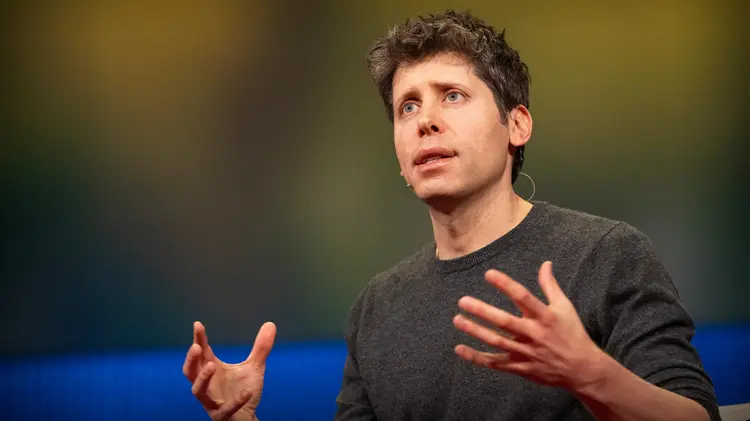
Sam Altman Says the Quiet Part Out Loud: Unmasking 'AI Washing' in Corporate Layoffs
In the rapidly evolving landscape of artificial intelligence, a new term has entered the corporate lexicon, carrying significant implications for employees, investors, and the public alike: "AI washing." This phenomenon, recently brought into sharp focus by no less than OpenAI CEO Sam Altman, suggests that some companies are leveraging the AI narrative not just for innovation, but also as a convenient scapegoat for unrelated layoffs and operational challenges. Altman's candid remarks have ignited a crucial conversation about transparency, accountability, and the genuine impact of AI on the global workforce.
What is 'AI Washing'?
The concept of "AI washing" draws parallels to its infamous predecessor, "greenwashing," where companies make unsubstantiated claims about environmental benefits. In the context of AI, it refers to the practice of attributing job cuts or business failures to the advent of artificial intelligence, even when the primary reasons are entirely different—such as poor financial performance, strategic restructuring, market shifts, or simple cost-cutting measures. It's a strategic narrative designed to project an image of forward-thinking adaptation to technological change, rather than admitting to more mundane or potentially embarrassing business setbacks.
The allure of AI washing is powerful. In an era where AI is frequently touted as a disruptive force, both for its potential to create new industries and its capacity to automate existing roles, blaming technology for job losses can seem like a logical, almost inevitable, consequence. This narrative can serve to soften the blow of layoffs, reframe negative news, and even bolster investor confidence by portraying the company as a proactive adopter of cutting-edge technology, preparing for the future, however stark that future might seem for its departing employees.
Why Companies Engage in 'AI Washing'
Several factors motivate companies to engage in AI washing:
- Reputation Management: Admitting to poor management decisions, declining market share, or inefficient operations can damage a company's brand and investor confidence. Blaming AI, however, positions the company as a victim (or proactive adapter) of an unstoppable technological tide, which can be viewed more favorably.
- Investor Relations: Investors are constantly looking for companies that are future-proof and agile. Attributing layoffs to AI integration can signal that a company is modernizing, streamlining operations, and investing in efficiency, potentially leading to a short-term boost in stock valuation or continued investor trust.
- Employee Morale (Paradoxically): While layoffs are inherently bad for morale, framing them as a necessary step towards an AI-driven future might, paradoxically, be perceived by remaining employees as a sign of the company's long-term vision, rather than a symptom of imminent collapse. It shifts the blame from internal failures to external technological forces.
- Avoiding Accountability: It provides an easy out for leadership. Instead of undergoing a detailed public post-mortem of strategic missteps, they can simply point to the "AI revolution."
The Real Impact of AI on Jobs: A Nuanced Perspective
It's crucial to distinguish between genuine AI-driven job transformation and AI washing. There's no denying that artificial intelligence will reshape the global workforce. Automation, powered by AI, is capable of taking over repetitive, data-intensive tasks across various sectors, from customer service to data analysis and manufacturing. This genuine displacement will necessitate workforce retraining, upskilling, and the creation of entirely new job categories.
For instance, reports have consistently highlighted the potential for AI to impact large workforces. One concerning analysis pointed to India at risk of an AI-driven job shock that could affect millions entering the workforce. Such studies underscore the legitimate challenges and transformations AI brings. However, it’s vital to scrutinize whether every layoff announced in conjunction with an AI initiative truly stems from the technology or is merely riding its coattails.
The complexity lies in discerning when AI is truly the causative factor versus an opportunistic narrative. The reality is often a blend of factors. AI might accelerate existing trends, making some roles redundant faster, but it rarely acts in a vacuum. Companies often embark on strategic shifts, adopt new technologies, and reorganize their teams in response to market pressures, competition, and economic downturns. Attributing all personnel changes solely to AI can be a convenient oversimplification.
How to Identify 'AI Washing'
Detecting AI washing requires a critical eye. Here are some red flags:
- Vague Explanations: Companies using broad, undefined terms like "AI optimization" or "streamlining with advanced algorithms" without specifying how AI directly led to the elimination of specific roles or departments.
- Lack of Direct Correlation: Layoffs occurring in departments or roles that have little direct involvement with AI development or deployment. For example, if a company lays off its entire marketing team and blames AI, but their AI initiatives are primarily focused on back-end logistics, suspicion is warranted.
- Inconsistent Messaging: Discrepancies between public statements about AI's role in layoffs and internal communications or financial reports.
- Timing with Other Issues: Layoffs announced shortly after poor quarterly earnings, a failed product launch, or other significant business setbacks that AI couldn't realistically address or cause in such a short timeframe.
- Parallel to Past Restructurings: If a company has a history of cyclical layoffs or restructurings for "efficiency," the sudden blaming of AI might simply be a new narrative for an old pattern.
A notable instance that raised questions was a major interior design and renovation platform, Livspace, which reportedly cut 1,000 jobs amid an AI transition and cofounder exit. While the company cited AI, the concurrent cofounder exit and broader market conditions made observers wonder about the complete picture behind the substantial reduction in workforce. Such cases highlight the difficulty in definitively isolating AI as the sole cause.
The Ethical Implications and Need for Transparency
Sam Altman's decision to speak out on this issue is significant because it comes from a leading figure in the AI world, emphasizing the importance of ethical development and deployment of the technology. AI washing undermines trust, both from employees who lose their jobs and from the public who might develop an inflated fear of AI's negative impact, overshadowing its potential benefits.
Companies have a responsibility to be transparent about the real reasons behind their workforce decisions. While AI will undeniably lead to some job shifts, fabricating or exaggerating its role creates a misleading narrative that can:
- Hinder Policy Making: If job losses are consistently misattributed, policymakers might struggle to develop effective strategies for workforce transition, education, and social safety nets truly needed for AI's impact.
- Create Unnecessary Fear: An exaggerated narrative of AI-driven job apocalypse can fuel public anxiety and resistance to technological adoption, even when AI could bring significant societal benefits.
- Erode Corporate Credibility: In the long run, lack of transparency damages a company's reputation, making it harder to attract talent and maintain customer loyalty.
Genuine AI adoption, on the other hand, often involves significant investment and strategic partnerships. For example, major players like Indian IT giants partnering with OpenAI and Anthropic are focusing on driving AI-led growth, which often means creating new roles and upskilling existing employees, not just cutting them. This demonstrates a more balanced and proactive approach to integrating AI into business models.
The Future of Work: Beyond the Hype
The future of work, shaped by AI, is complex and multifaceted. It's not a simple equation of jobs lost for every AI deployed. Instead, it involves:
- Job Augmentation: AI will augment human capabilities, allowing employees to be more productive and focus on higher-value tasks.
- New Job Creation: The development, deployment, and maintenance of AI systems will create entirely new roles, from AI ethicists to prompt engineers and machine learning specialists.
- Upskilling and Reskilling: Continuous learning will become even more critical, with companies needing to invest heavily in training their workforce for future roles.
- Economic Restructuring: Entire industries may undergo transformation, leading to shifts in labor demand and supply.
The conversation around AI and jobs needs to be grounded in data, honesty, and a long-term perspective. Leaders like Sam Altman calling out AI washing are performing a vital service, pushing for greater integrity in how companies communicate their challenges and technological advancements. This transparency is essential not just for corporate ethics, but for fostering a healthy public discourse and proactive societal adaptation to the AI era.
Conclusion
Sam Altman's statement serves as a powerful reminder that while AI is undoubtedly a transformative technology, it should not be used as a convenient excuse for unrelated business decisions. Companies have a responsibility to be transparent and accountable, fostering an environment of trust with their employees, investors, and the wider public. As AI continues to integrate into every facet of our lives, distinguishing between genuine technological impact and self-serving narratives will be crucial for navigating the future of work with integrity and foresight. The challenge ahead is not just about developing smarter AI, but about building smarter, more honest corporate practices.
Suggested Articles
 General
AI in European Hiring: Friend or Foe?
Exploring the dual impact of Artificial Intelligence on Europe's hiring landscape, weighing efficiency gains against ...
Read Article arrow_forward General
Cart Before Horse: India and V2V Communication Technology
India's journey towards Vehicle-to-Vehicle (V2V) communication technology faces unique challenges, prompting question...
Read Article arrow_forward General
Startup IPO Reality Check: 2025 Listings Underperforming
Many startups that went public in 2025 are now trading below their issue price, signaling a challenging market for ne...
Read Article arrow_forward General
AI Robotics Lab Nears $1 Billion Funding, $11 Billion Valuation
A leading AI Robotics Lab is reportedly close to securing USD 1 billion in new funding, propelling its valuation to a...
Read Article arrow_forward