

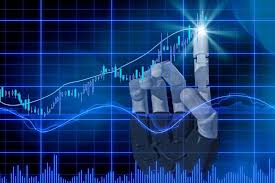
The AI Revolution: A Dominant Narrative, But Not the Whole Story
In boardrooms, tech conferences, and media headlines, Artificial Intelligence (AI) has emerged as the undisputed star of the global economy. From automating complex tasks to revolutionizing industries, its impact is undeniable and growing. Tech giants' valuations soar on the promise of AI, and virtually every sector, from finance to healthcare, is scrambling to integrate AI solutions. Indeed, the buzz around AI suggests that it is not merely a component of the modern economy, but increasingly, its very engine. This narrative, while compelling and partly true, risks overshadowing the myriad other powerful forces that continue to shape the world's economic landscape.
While AI undoubtedly represents a monumental technological leap with profound implications for productivity, innovation, and job markets, it exists within a complex ecosystem. Attributing all global economic trends solely to AI would be a myopic view, ignoring the enduring strength of traditional sectors, the complexities of human capital, geopolitical shifts, resource availability, and fundamental consumer behaviors. To truly understand the global economy, we must look beyond the glow of the AI spotlight and appreciate the diverse, often deeply entrenched, factors that continue to drive prosperity, stability, and change.
Acknowledging AI's Transformative Power (and its Limits)
Before delving into the other economic pillars, it's crucial to acknowledge where AI truly shines. Generative AI, machine learning, and advanced analytics are indeed transforming how businesses operate, creating new markets, and unlocking efficiencies. Companies are leveraging AI for everything from personalized customer experiences to predictive maintenance, leading to significant cost savings and revenue growth. Investment in AI startups and research is at an all-time high, with nations vying for technological supremacy.
However, even within its sphere, AI faces limitations. Its development requires immense computational power, drawing heavily on energy resources and specialized hardware. The ethical implications, regulatory challenges, and the potential for job displacement are not mere footnotes but significant considerations that shape its integration and overall economic impact. Moreover, the benefits of AI are not evenly distributed, creating a digital divide that can exacerbate economic inequalities between nations and within societies.
The Enduring Pillars: Traditional Industries Still Drive Global Trade
Manufacturing and Industry
Despite the rise of software and digital services, the physical act of making things remains a cornerstone of the global economy. Manufacturing accounts for a substantial portion of global GDP and employment. Factories produce everything from automobiles and electronics to textiles and machinery. While AI is certainly making inroads into optimizing supply chains, enhancing automation, and improving quality control in manufacturing, the fundamental processes of raw material extraction, production, assembly, and distribution are largely driven by physical infrastructure, human labor, and established trade networks. Innovations in materials science, robotics (often AI-enhanced, but also mechanically driven), and lean manufacturing principles continue to be critical.
Agriculture and Food Production
Feeding a global population of billions is perhaps the most fundamental economic activity. Agriculture employs a vast percentage of the world's workforce, especially in developing nations, and forms the basis of countless economies. Climate patterns, soil health, water availability, and agricultural policies often have a far more immediate and widespread economic impact than any AI algorithm. While AI is being used in precision farming and crop optimization, human farmers, land, and water are indispensable. Fluctuations in global food prices, driven by weather events or geopolitical tensions, can send shockwaves through national economies, illustrating the raw power of this traditional sector.
Energy and Resources
The global economy runs on energy. From fossil fuels to renewables, the production, distribution, and consumption of energy resources are critical drivers of economic activity and geopolitical influence. Price volatility in oil, natural gas, or rare earth minerals can trigger inflation, shift trade balances, and even provoke international conflicts. The transition to renewable energy sources, while often benefiting from AI for grid optimization and predictive maintenance, is fundamentally an infrastructure and investment challenge, requiring massive capital expenditure, policy support, and physical construction. The global demand for essential raw materials like copper, lithium, and steel, often facing shortages driven by the AI boom and other tech advancements, highlights that tangible resources remain paramount.
Human Capital: The Irreplaceable Engine of Progress
While AI excels at data processing and pattern recognition, human skills—creativity, critical thinking, emotional intelligence, leadership, and ethical reasoning—remain invaluable. Service industries, which constitute the largest portion of many developed economies, rely heavily on human interaction. Healthcare, education, hospitality, arts, and even many aspects of digital marketing thrive on human connection and nuanced understanding. The ability to innovate, negotiate, manage complex projects, and adapt to unforeseen challenges is uniquely human.
Moreover, the labor market dynamics extend far beyond AI's direct influence. Factors such as education systems, demographic shifts, labor laws, and social safety nets play a crucial role in shaping economic productivity and wealth distribution. Discussions around job displacement due to AI, particularly concerning regions like India where there's a risk of AI-driven job shock affecting millions, underscore the complex interaction between technology and human employment. This isn't just about AI creating new jobs; it's about reskilling, social adaptation, and the fundamental value of human work.
Geopolitics, Trade, and Monetary Policy: The Invisible Hands
Beyond technology and industry, the macroeconomic environment is heavily influenced by non-AI factors:
- Geopolitical Stability: Conflicts, trade wars, and international alliances significantly impact global supply chains, investment flows, and market confidence. Sanctions, tariffs, and political instability can reshape entire industries and national economies overnight, often overshadowing technological advancements.
- Monetary and Fiscal Policies: Central banks' decisions on interest rates, governments' spending and taxation policies, and national debt levels are powerful economic levers. Inflation, recession, and economic growth are frequently direct consequences of these policies, not solely driven by technological progress. For instance, the discussion around moderate salary hikes in India in 2026, as projected by the Aon survey, reflects broader economic indicators and corporate strategies, where AI's role is often one factor among many.
- Trade Agreements and Tariffs: International trade rules, bilateral agreements, and trade disputes heavily influence the flow of goods and services, impacting prices, profits, and employment across borders.
Consumer Behavior and Demographics: Fundamental Demand Drivers
Ultimately, economies are driven by demand. Consumer confidence, purchasing power, demographic shifts (e.g., aging populations, birth rates), and cultural trends dictate what products and services are consumed. AI might personalize recommendations, but it doesn't create the underlying desire for housing, entertainment, healthcare, or education. Wealth distribution, income levels, and access to credit are more fundamental to consumer spending than any AI innovation. A booming population will increase demand for basic goods and services, regardless of AI's sophistication.
Innovation Beyond Algorithms: Diverse Fields of Progress
While AI captivates attention, innovation continues across a vast spectrum of scientific and technological fields that are not exclusively AI-dependent. Biotechnology, renewable energy breakthroughs (e.g., advanced solar cells, fusion power), new materials science, space exploration, and quantum computing all represent distinct avenues of progress with significant economic potential. These fields often leverage AI as a tool, but their core breakthroughs stem from fundamental scientific principles, engineering ingenuity, and vast capital investment, opening up new industries and markets independent of AI's core capabilities.
Conclusion: A Holistic View for True Understanding
To assert that the global economy is 'all about AI' is to simplify a profoundly intricate system. While AI is undeniably a powerful and transformative force, its influence is intertwined with, and often constrained by, a multitude of other factors. The enduring strength of traditional industries, the irreplaceable value of human capital, the impact of geopolitical dynamics, prudent monetary policies, fundamental consumer behavior, and diverse scientific innovation all play equally critical roles in shaping our economic reality.
A balanced perspective recognizes AI as a crucial enabler and catalyst for change, but not the singular orchestrator of global prosperity. The global economy is a complex symphony where AI is a prominent instrument, yet many others play equally vital parts, creating a harmonious, albeit sometimes discordant, whole. Understanding this multifaceted interplay is essential for navigating the opportunities and challenges of the future, ensuring that we leverage AI's potential while remaining grounded in the broader economic realities that shape our world.
Suggested Articles
 General
Dr. A Shiju Rawther Joins CareEdge Ratings as CITO
CareEdge Ratings appoints Dr. A Shiju Rawther as its new Chief Information & Technology Officer, signaling a strategi...
Read Article arrow_forward
General
AI Revolutionizes Targeted mRNA Delivery with LNP Design
Discover how Artificial Intelligence is transforming the design of Lipid Nanoparticles (LNPs) for precise in vivo tar...
Read Article arrow_forward Business
Apple iPhone 17 Gets Massive Price Cut: How Buyers Can Grab It Under Rs.50,000
Apple’s iPhone 17 sees a major price cut in India, making it available for under Rs. 50,000 with bank discounts and e...
Read Article arrow_forward General
Amid SaaSpocalypse Fears, Startup Boosts Salesforce with RevOps
A new startup is tackling "SaaSpocalypse" fears by integrating advanced Revenue Operations (RevOps) solutions directl...
Read Article arrow_forward